
Pakistan’s construction industry is undergoing a significant transformation. Across Punjab’s industrial cities, along Karachi’s coastline, and in Islamabad’s expanding suburbs, a growing number of businesses and homeowners are choosing prefab homes as a faster, more affordable, and more reliable alternative to traditional brick-and-mortar construction.
A fabricated house in Pakistan is no longer just a temporary site office or a basic shed. Today’s prefab homes are precision-engineered structures that match — and in many cases exceed — the durability, comfort, and design quality of conventional buildings. Because they are built in controlled factory environments, they deliver fewer delays, less material waste, and more predictable costs than anything built on site from scratch.
At Steel City, we have delivered hundreds of prefab projects for factories, housing societies, industrial companies, NGOs, and homeowners across Pakistan. With completed installations in Lahore, Faisalabad, Rawalpindi, Multan, Karachi, and Islamabad, we understand exactly what Pakistan’s climate, building regulations, and project timelines demand from a modern prefab structure.
What Is a Prefabricated Home?
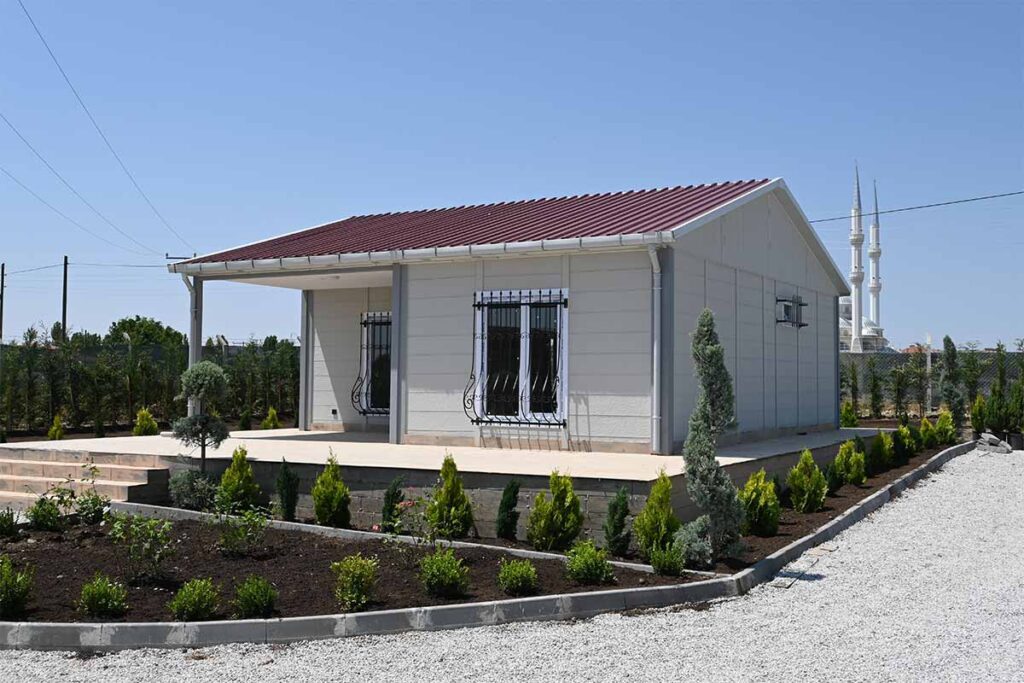
A prefab home — short for prefabricated home — is a structure whose components are manufactured in a factory and then transported to the site for assembly. Unlike conventional construction where everything is built from scratch on location, a prefab home arrives in ready-to-install sections, which is what makes a fabricated house in Pakistan so fast and efficient to deliver.
The process works as follows: PEB steel frames, sandwich panels, and insulation materials are designed, cut, shaped, and quality-checked in a controlled factory environment. They are then transported to the site and assembled. Electrical and plumbing works are completed, and the building is handed over. From foundation to handover, a typical prefab home takes 4 to 10 weeks — compared to 6 to 18 months for brick construction of the same size.
Types of Prefab Homes in Pakistan
There are three main types of prefabricated structures available in Pakistan. The right choice depends on your budget, purpose, and project timeline.
Modular Homes
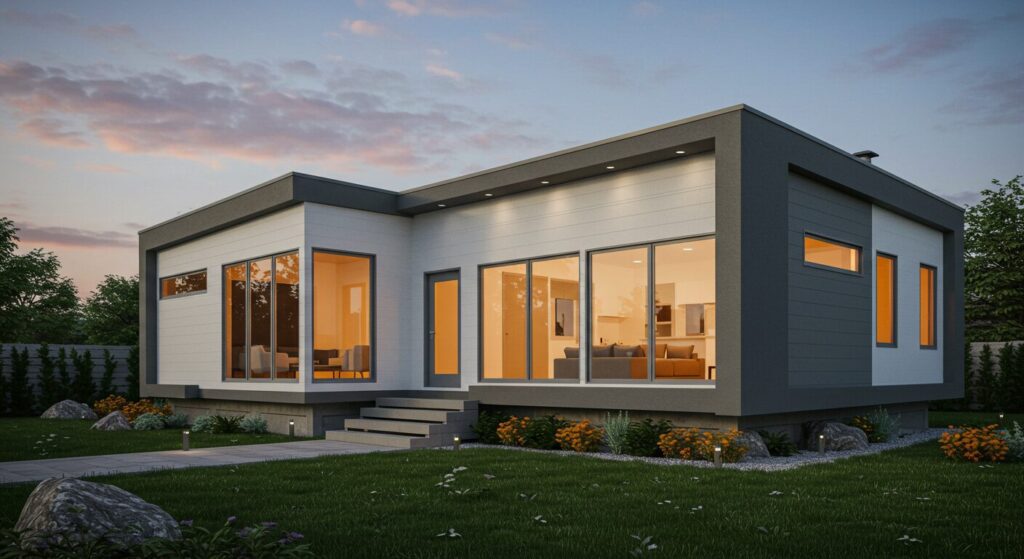
Modular homes are prefab structures built in separate factory-finished sections called modules. Each module arrives at the site complete — walls, flooring, ceiling, and electrical wiring are all done before delivery. On site, the modules are craned into position and connected to form the finished building.
In Pakistan, modular homes are ideal for residential housing societies, worker accommodation blocks, and multi-story commercial buildings. Because every module is manufactured to tight factory tolerances, quality is consistent and the risk of on-site construction defects is minimized. Modular homes can also be expanded in the future by adding more modules, making them a sound long-term investment for housing developers across Punjab, Karachi, and Islamabad.
Fabricated Houses
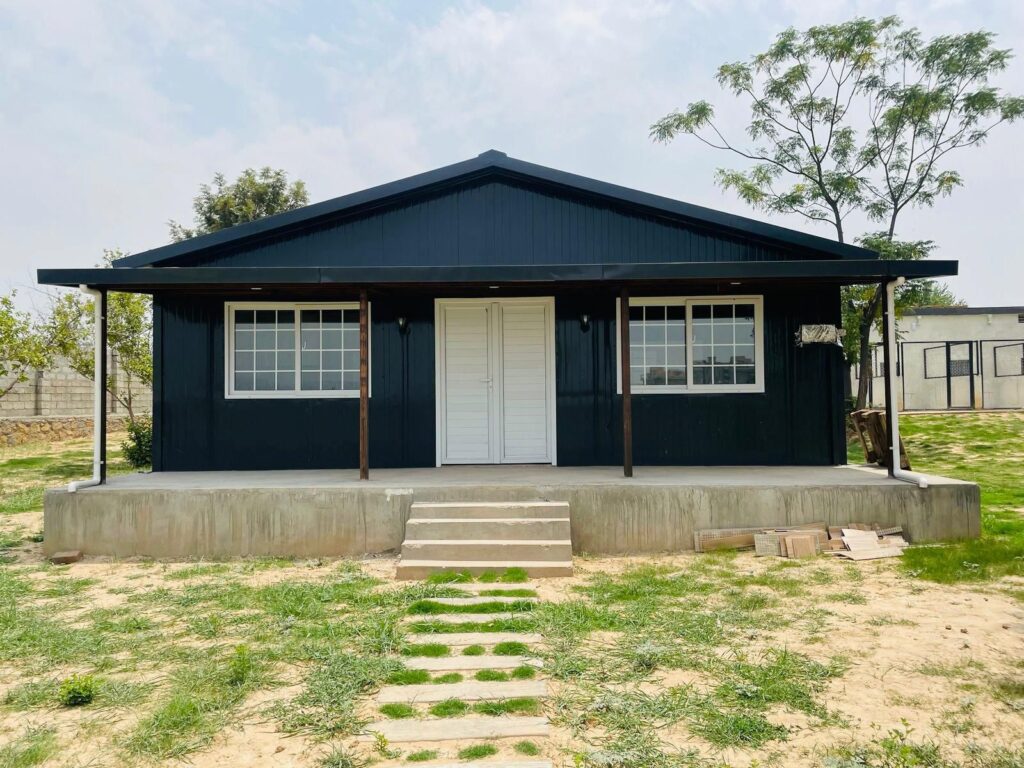
A fabricated house in Pakistan is a custom-designed steel-frame structure built to specific architectural requirements. Unlike modular homes, fabricated houses are designed from the ground up — whether for a residential villa, a corporate office building, a school, a clinic, or an industrial facility.
The structural frame is made from Pre-Engineered Building (PEB) steel, fabricated according to approved engineering drawings. Sandwich panels are fitted to the walls and roof to provide thermal insulation and weatherproofing. The result is a fully functional, purpose-built structure delivered in a fraction of the time of conventional construction.
Porta Cabins
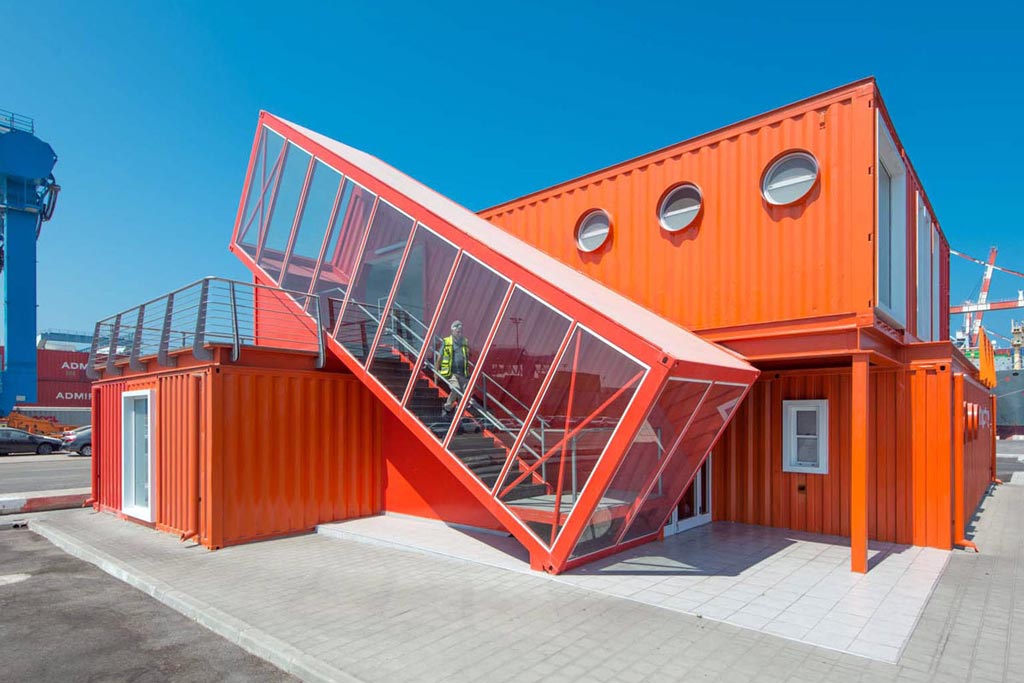
Porta cabins are self-contained, pre-assembled units designed for rapid deployment anywhere in Pakistan. They are commonly used as site offices, guard rooms, canteen facilities, first-aid centers, and temporary accommodation on construction sites, industrial facilities, and agricultural operations. Steel City’s porta cabins are built from galvanized steel with sandwich panel walls and roofs, delivering weatherproof and thermally insulated comfort in Pakistan’s most demanding climates.
Why Prefab Homes Are Transforming Pakistan’s Construction Sector
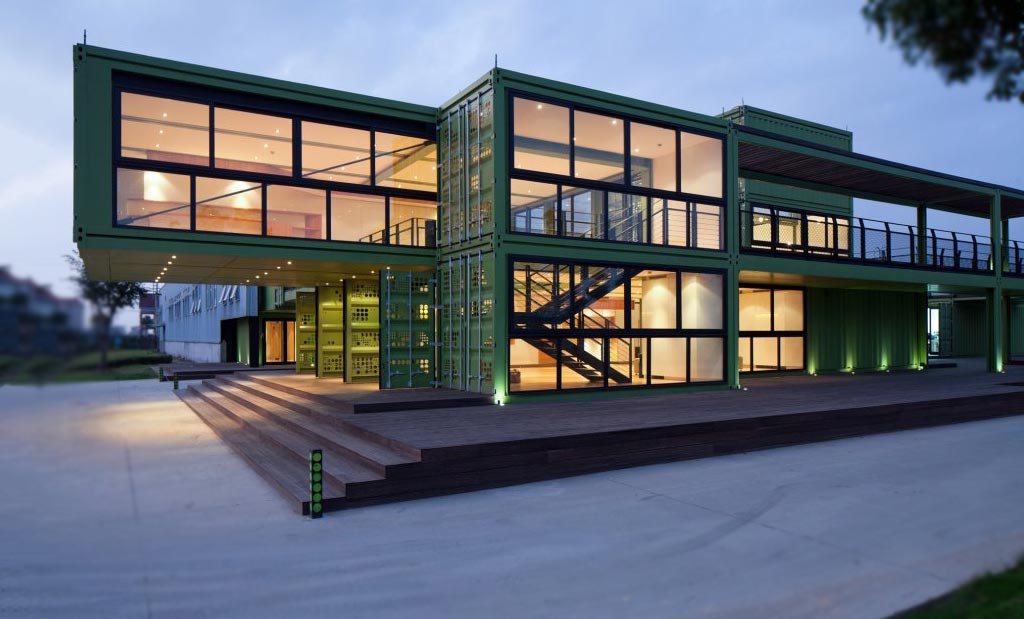
Speed of Construction
Traditional construction in Pakistan takes months — sometimes years — from breaking ground to handover. A prefab home is ready for occupancy in 4 to 12 weeks. Because factory fabrication runs in parallel with site preparation, no time is lost waiting for materials or trade sequences. For industrial clients who need a facility operational within a season, or for housing developers working to fixed handover deadlines, this speed advantage is transformative.
Cost-Effectiveness
Prefab construction reduces costs at every stage. Factory production minimizes material waste — offcuts are recycled and quantities are calculated precisely before production begins. Bulk procurement of steel and sandwich panels keeps material costs consistent and predictable. On-site labor requirements are a fraction of those for brick construction. And once built, prefab homes require minimal maintenance: no plaster to crack, no paint to peel, and no waterproofing to replace season after season.
Durability for Pakistan’s Extreme Climate
Pakistan’s climate is one of the most demanding in the world for building materials. Lahore and Faisalabad regularly record summer temperatures above 45°C. Karachi endures salt-laden coastal humidity and intense monsoon rainfall. Islamabad and KPK experience cold winters and heavy snowfall. Each of these environments places very different demands on a building.
Prefab homes built with PEB steel frames and sandwich panels are engineered to perform in all of these conditions. The galvanized steel frame resists rust and corrosion even in Karachi’s coastal environment. The sandwich panel walls provide thermal insulation that keeps interiors naturally cool in Punjab’s summers and warm in Islamabad’s winters. Unlike brick-and-mortar structures, prefab buildings do not develop structural cracks, damp penetration, or settlement over time.
Sustainable Building and Eco-Friendly Benefits
Prefab construction is inherently a more eco-friendly approach than conventional building methods. Factory production generates significantly less waste, and material quantities are calculated in advance so nothing is over-ordered or discarded on site. Sandwich panel walls and roofs naturally insulate buildings, reducing energy consumption for cooling in summer and heating in winter throughout the building’s lifespan.
For businesses pursuing sustainable building commitments, green certifications, or ESG targets, choosing a prefab home is one of the most practical steps available in Pakistan’s construction market. Many of the steel components used in prefab construction are manufactured from recycled material, further reducing the project’s environmental footprint compared to a brick equivalent.
Sandwich Panels — The Heart of Sustainable Prefab Construction in Pakistan
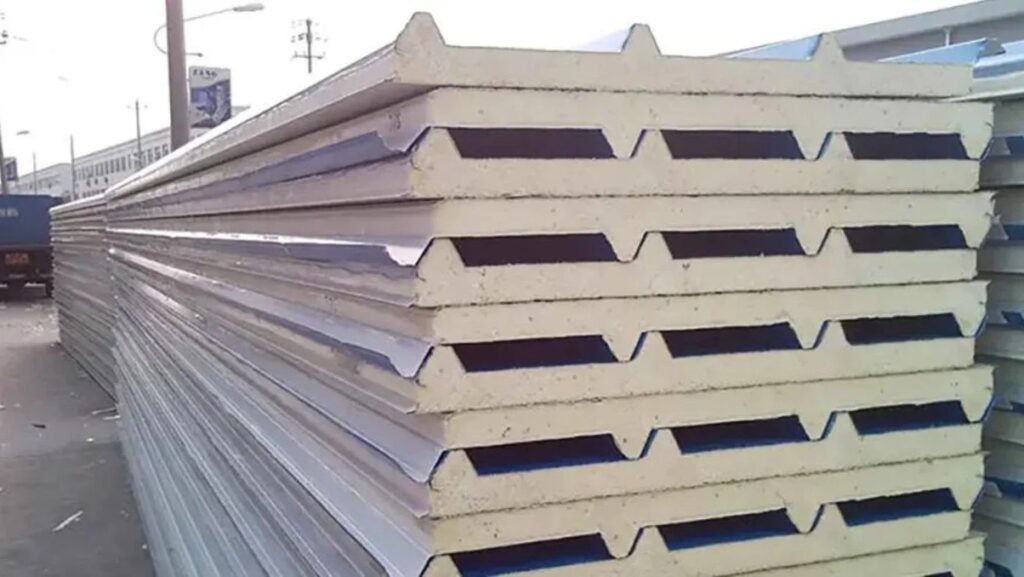
No discussion of prefab homes in Pakistan is complete without understanding sandwich panels. These composite building panels consist of two outer metal skins — typically galvanized or color-coated steel — bonded to an insulating core. In a single factory-made panel, they deliver the wall structure, the thermal insulation, and the weatherproofing layer all at once.
The core material determines the panel’s performance characteristics. Steel City works with three main types:
- EPS (Expanded Polystyrene): Lightweight, cost-effective, and widely specified for wall and roof panels in warm climates. The standard choice for prefab homes in Punjab and Karachi, offering excellent all-round thermal performance at the most accessible price point.
- PU (Polyurethane): Higher thermal resistance than EPS, making it the preferred specification for Islamabad’s colder winters, premium residential projects, and any facility requiring close temperature control such as cold storage or laboratories.
- Rockwool / Mineral Wool: A non-combustible core with superior fire resistance and sound insulation properties. Specified for industrial buildings, factories, and any facility where fire safety regulations require non-flammable materials.
By combining structural cladding, insulation, and weatherproofing in a single panel, sandwich panels eliminate multiple construction trades from the programme. This is what makes them the defining material of sustainable building in Pakistan’s prefab sector — they deliver thermally efficient, eco-friendly buildings that maintain comfortable interior conditions year-round without excessive energy consumption.
Key Materials Used in Prefabricated Houses in Pakistan
| Material | Typical Use | Key Benefit | Pakistan Application |
| PEB Steel Frame | Main structure | High strength, long lifespan | All Pakistan climates — universal choice |
| EPS Sandwich Panels | Walls & roofs | Thermal insulation, lightweight, cost-effective | Punjab summer heat and Karachi humidity |
| PU Sandwich Panels | Premium walls, cold storage | Superior insulation, higher U-value | Islamabad winters and food-grade facilities |
| Rockwool Panels | Industrial walls & roofs | Fire-resistant, excellent soundproofing | Factories and industrial zones Pakistan-wide |
| Galvanized Steel Cladding | External surfaces | Rust-resistant, moisture-proof | Karachi coastal projects and Sindh flood zones |
| PVC Doors & Windows | All openings | Weatherproof, affordable, lightweight | All climates across Pakistan |
Prefab Homes Across Pakistan — Punjab, Karachi & Islamabad
Pakistan’s provinces and major cities each have distinct construction challenges. Steel City’s prefab systems are specified and engineered to meet the requirements of each region.
Punjab — Lahore, Faisalabad, Rawalpindi, Multan, Gujranwala & Sialkot
Punjab is Pakistan’s most populous province and its industrial heartland — and it is where demand for prefab homes and modular homes is growing fastest. Lahore’s rapid suburban expansion is creating strong demand for quick-delivery housing. Faisalabad’s textile mills and manufacturing plants need worker accommodation and factory extensions at a pace that conventional construction cannot match. Rawalpindi’s strategic location as the gateway to Islamabad drives steady demand for commercial and logistics infrastructure. Multan, Gujranwala, and Sialkot are seeing accelerating prefab demand as their export-oriented industries scale up their operations.
Punjab’s summer heat — regularly exceeding 45°C in Multan and Faisalabad — makes thermal insulation a non-negotiable requirement for any habitable structure. Steel City specifies EPS-core sandwich panels for standard residential and commercial applications across Punjab, and PU-core panels for any project requiring higher thermal performance or premium interior comfort. Both panel types keep interior temperatures stable without placing excessive load on air conditioning systems, which translates directly into lower energy bills across Punjab’s long, hot summers.
Karachi and Sindh
Karachi is Pakistan’s commercial capital and the country’s most dynamic construction market. The coastal environment presents challenges that are entirely different from Punjab: saltwater humidity, sea-air corrosion, and annual monsoon flooding impose demands on building materials that brick-and-mortar construction is poorly equipped to handle.
Prefab homes and fabricated houses in Karachi and coastal Sindh are built with galvanized or pre-painted steel frames and EPS sandwich panels that are specifically resistant to salt-air corrosion — the primary cause of structural degradation in Karachi’s building stock. For port-area warehouses, manufacturing facilities, and worker housing camps, prefab is the first choice for developers who need durability and speed in equal measure. Inland Sindh — including Hyderabad and Sukkur — is seeing growing demand from the agricultural processing sector, where Steel City delivers porta cabins and modular homes to remote farm and facility locations across the province.
Islamabad and Rawalpindi
Islamabad’s construction environment is defined by regulatory rigour. The Capital Development Authority (CDA) enforces some of the strictest structural, material, and aesthetic standards in Pakistan. Every prefab project in Islamabad requires stamped engineering drawings, full compliance documentation, and CDA approval before construction can begin.
Steel City’s fabricated houses and modular homes are designed and certified to meet all CDA requirements. For Islamabad’s expanding technology parks, corporate campuses, diplomatic zone facilities, and residential sectors, prefab construction delivers the quality and finish of a conventional building at significantly lower cost and in a fraction of the time. Islamabad’s cold winters — temperatures can fall below 2°C in January — require buildings with substantially higher thermal performance than Punjab. Steel City specifies PU-core sandwich panels for all Islamabad projects, delivering the insulation values needed to maintain comfortable interior temperatures through the coldest months without high heating costs.
Design Options and Sizes Available from Steel City
Steel City offers a complete range of prefab structures to match every budget, purpose, and location across Pakistan:
- Single-story residential prefab homes — 50 sqm to 500+ sqm
- Multi-story modular homes and apartment blocks
- Custom fabricated office buildings — open-plan or fully partitioned layouts
- Worker accommodation blocks and industrial labor camps
- Warehouses, factory buildings, and agricultural storage facilities
- Portable cabins for site offices, guard rooms, and temporary accommodation
- Premium prefab villas with modern interior finishes and custom facades
All designs are prepared by our in-house engineering team and fully customizable to match your site dimensions, local authority requirements, and design preferences. Every project is delivered with complete engineering drawings, material specifications, a structural certificate, and an after-installation warranty.
FAQ’s About Prefab Homes in Pakistan
Are prefab homes suitable for permanent residential use in Pakistan?
Yes. Modern prefab homes are built to the same structural standards as conventional buildings. With a PEB steel frame and sandwich panel walls and roof, a well-maintained prefab home will last 30 to 50 years or more. Steel City provides full engineering drawings and structural certification for all permanent residential projects, meeting the requirements of local building authorities across Pakistan.
What is the price of a prefab home in Pakistan?
Costs depend on size, design, location, and specifications. Entry-level porta cabins start from PKR 8 to 15 lakh. Single-story prefab homes typically range from PKR 25 to 60 lakh depending on floor area and finish. Multi-story or fully custom modular homes are priced according to project-specific requirements. Contact Steel City for a free, detailed quote tailored to your project.
How long does installation of a fabricated house in Pakistan take?
A standard fabricated house in Pakistan takes 4 to 8 weeks from order confirmation to handover. Larger multi-story or custom modular projects may take 10 to 16 weeks. Because factory fabrication runs in parallel with site preparation, the total programme is significantly shorter than conventional brick construction of the same specification.
Are prefab homes approved by local building authorities in Pakistan?
Yes. Steel City prepares all required engineering documentation and liaises with the relevant local authorities on your behalf, including LDA (Lahore), FDA (Faisalabad), RDA (Rawalpindi), MDA (Multan), KDA (Karachi), and CDA (Islamabad). All structures are delivered with stamped engineering drawings and comply with Pakistan’s national building codes.
What makes prefab homes in Punjab different from those in Karachi or Islamabad?
Each region requires a different specification. Punjab projects prioritize heat resistance and are typically built with EPS sandwich panels for maximum thermal performance in summer temperatures above 45°C. Karachi projects require galvanized steel and corrosion-resistant cladding to handle salt-air humidity and monsoon exposure. Islamabad projects specify PU-core sandwich panels for superior winter insulation, and all CDA documentation requirements are incorporated from the design stage.
How eco-friendly are prefab homes compared to brick construction?
Significantly more eco-friendly. Factory production generates less construction waste, and material quantities are calculated precisely so nothing is over-ordered. Sandwich panel walls and roofs provide natural thermal insulation that reduces energy consumption for the building’s entire lifespan — typically cutting cooling and heating costs by 20 to 35% compared to an equivalent brick structure. Many of the steel components used are manufactured from recycled material, reducing the carbon footprint of the overall project.
Can a prefab home in Pakistan be expanded or relocated?
Yes — and this flexibility is one of prefab construction’s most practical advantages. Modular homes can be extended by adding additional modules as requirements grow. Porta cabins can be fully relocated to a new site with minimal effort. Even larger fabricated houses can be partially dismantled and rebuilt elsewhere if needed. No conventional brick construction offers this level of adaptability.
Why Choose Steel City for Your Prefab Project in Pakistan?
Steel City has delivered prefab homes, modular homes, fabricated houses, and industrial structures to clients across Pakistan — from leading textile factories in Faisalabad and housing developers in Lahore, to corporate offices in Islamabad and logistics facilities in Karachi. Every project is managed by our in-house team of qualified structural engineers, experienced fabricators, and certified site supervisors.
We manage the complete project lifecycle: design, engineering drawings, factory fabrication, quality control, delivery, and on-site assembly. Because we fabricate within Pakistan, our lead times are shorter and our logistics costs are lower than any imported prefab alternative. Every structure we deliver comes with a structural warranty, full engineering certification, and dedicated after-sales support.
Get Your Custom Prefab Quote Now
Ready to build a prefab home, modular home, or fabricated structure in Pakistan? Whether your project is in Lahore, Karachi, Islamabad, Faisalabad, Rawalpindi, Multan, or anywhere else across Pakistan, Steel City’s engineering team is ready to help.
Contact us today via WhatsApp or phone for a free consultation and detailed project quote. Share your requirements — size, location, purpose, and budget — and our team will prepare a complete proposal within 24 hours.
Build smarter, Build faster, Build with Steel City.