
A leak rarely picks a convenient moment. It turns up at 2 a.m. in the second week of July, directly over the one pallet you can’t afford to get wet.
If you run a factory shed, warehouse, cold store, workshop or poultry house, maintenance isn’t a “when we get time” job. The monsoon tests every screw, lap and gutter you own. The weeks afterwards, when nights cool down but the air stays damp, quietly test everything else. Get the timing right and most problems cost you a screwdriver and an afternoon. Get it wrong and they cost you stock, production days and, eventually, sheets.
The rule of thumb is short enough to write on a whiteboard: barsaat se pehle, check; barsaat ke baad, repair. This guide shows you how to do both, what to watch for in between, and where DIY ends and a proper inspection begins.
Why the monsoon is so hard on steel sheds in Punjab
Steel is tough, but a steel shed isn’t only steel. It’s thousands of small joints: screws, washers, laps, sealant lines, flashings and gutter seams. Those joints do the waterproofing, and they’re usually the first thing to fail. The big structural members rarely go first.
Punjab’s weather keeps those joints under steady strain. Summer heat expands the sheets by day and lets them contract at night, and after a few seasons that movement loosens fasteners and cracks old sealant. Dust storms leave a film across the roof and fill the gutters. Then the first heavy rain turns that dust into mud, parks it in your outlets and sends the overflow down the walls.
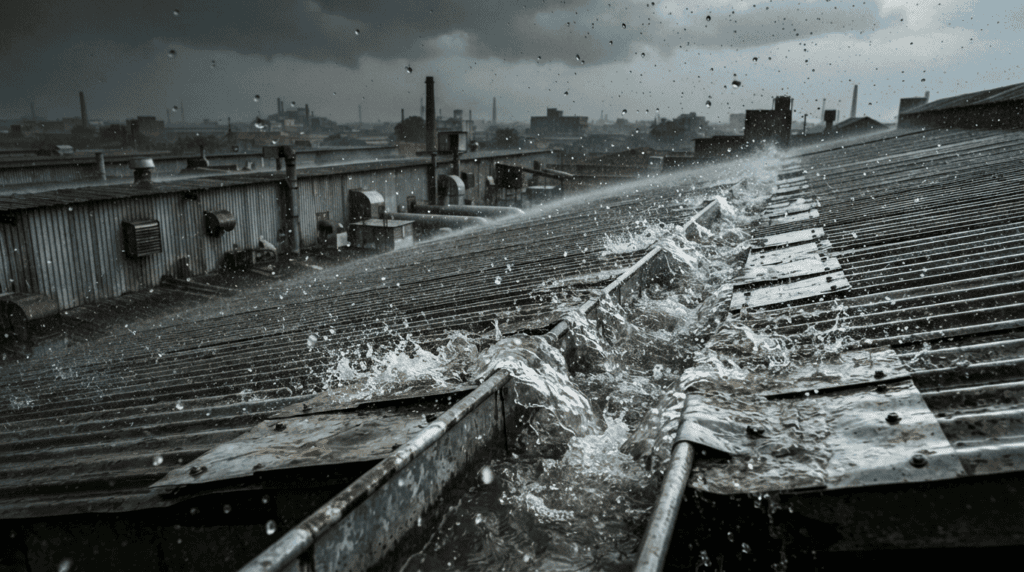
The 2026 season shows why averages mislead. PMD figures reported by ProPakistani put Punjab’s monsoon rainfall about 4 percent below normal. Yet Lahore airport recorded 252 mm in a single day on 23 July, and Gujranwala collected 607 mm across July. A shed doesn’t care about the seasonal total. It cares about the one afternoon when the gutters can’t keep up. Punjab’s PDMA had also warned of windstorms and hail alongside rain ahead of the first spell, and wind and hail are what lift loose ridge caps and dent thin sheets.
Then there’s the air itself. A shed beside textile processing, a tannery, a chemical store or a poultry house breathes harsher air than a dry-goods godown. Steel-building makers such as Zamil Steel say the inspection interval should follow the environment, which means a shed in a harsh zone needs shorter gaps between checks, not the default ones.
A simple inspection calendar for Punjab
| Window | Purpose | Main focus |
|---|---|---|
| May to mid-June | Pre-monsoon inspection | Roof, fasteners, gutters, base, electrics, ventilation |
| July to September | During the rains | Quick checks after each heavy spell, leak diary, overflow watch |
| Late September to October | Post-monsoon repair round | Rust, re-sealing, silt, wet insulation, condensation |
| November to January | Cold nights and fog | Condensation and ventilation |
| After any storm | Event check | Hail dents, wind-lifted ridge caps, loose flashings |
Monsoon dates move around from year to year, so follow the alerts from PMD and PDMA Punjab more than the calendar, and finish your pre-monsoon work before the first one lands.
Steel shed maintenance before the monsoon: the pre-monsoon checklist
Do this in May or early June, while the roof is dry. Start at sunrise. Metal is too hot to handle by mid-morning, and heat exhaustion causes its own accidents.
Warehouse roof leak inspection: three angles, one log
Most roof leaks start at a joint, not in the middle of a sheet. So inspect the joints from three angles.
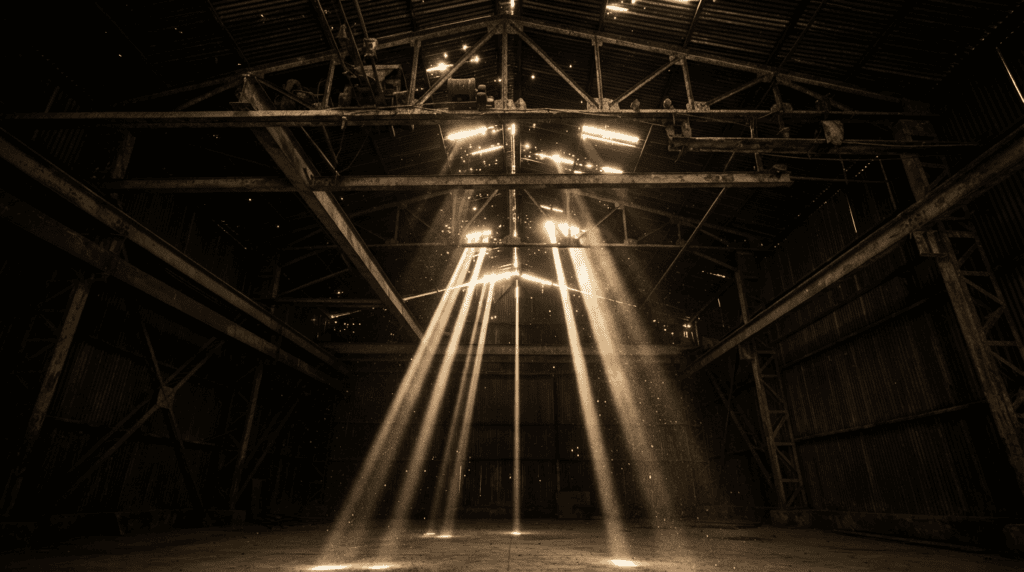
From inside, in daylight. Switch the lights off and look up. Pinpricks of daylight are holes or loose fasteners. Look for rust trails on purlins, stained or sagging insulation, dark streaks, and white mineral deposits where water has been wicking through. Mark each spot with a paint marker and write down the bay number.
From the roof, if it’s safe to go up. Walk each fastener row, one at a time. You’re looking for screws that have backed out, washers that have cracked or flattened, sealant that has split along the laps, and missing foam closure strips at the ridge and eaves. Check everything that pokes through the roof: vents, turbine ventilators, skylights, cable entries, solar mounts. Ponding marks point to a sag. Drilling swarf left on the sheets will rust and stain, so brush it off.
With water. For stubborn leaks, run a hose over one section at a time, starting low and working uphill, while a helper inside calls out when it drips. It’s tedious. It also works.
Write everything down. A phone photo labelled with a bay number is a better memory than yours or mine.
Roof safety, plainly. Never climb a wet roof or go up when lightning is around. Never step on translucent sheets, and treat every skylight as a hole. Wear a harness, use a roof ladder or crawl board, and work in pairs. Follow the sheet maker’s walking guidance, and stay off flashings, gutters and ridge caps, as MBCI’s roof maintenance advice also stresses.
Fasteners, laps and sealants
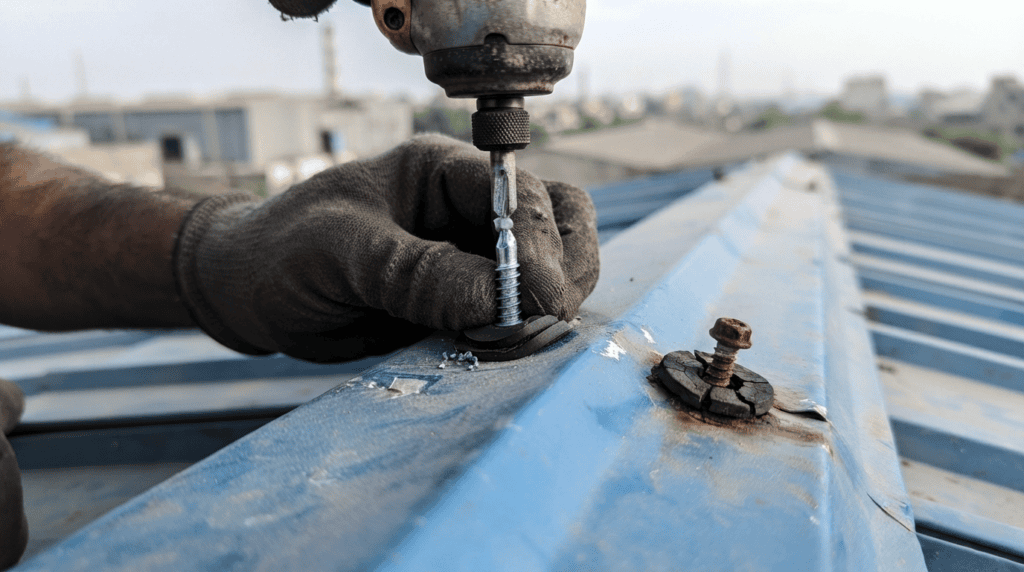
- Replace rusted or backed-out screws with the right self-drilling type and a sealing washer. A stripped hole needs a proper repair, not more torque.
- Re-seal laps with a sealant rated for metal roofing, on clean, dry steel. Bathroom silicone isn’t built for a roof that bakes all summer.
- Resist smearing paste across a whole lap. It traps water and hides the real source of the leak.
Shed gutter inspection: the job everyone skips
Gutters are boring right up until they overflow. Then water runs down your walls, pools at the base and keeps the bottom of the sheets wet for days, which is exactly where rust likes to start. AA Metal Buildings calls blocked gutters the most direct path to base-panel corrosion, and mud packed against base panels one of the most preventable causes.
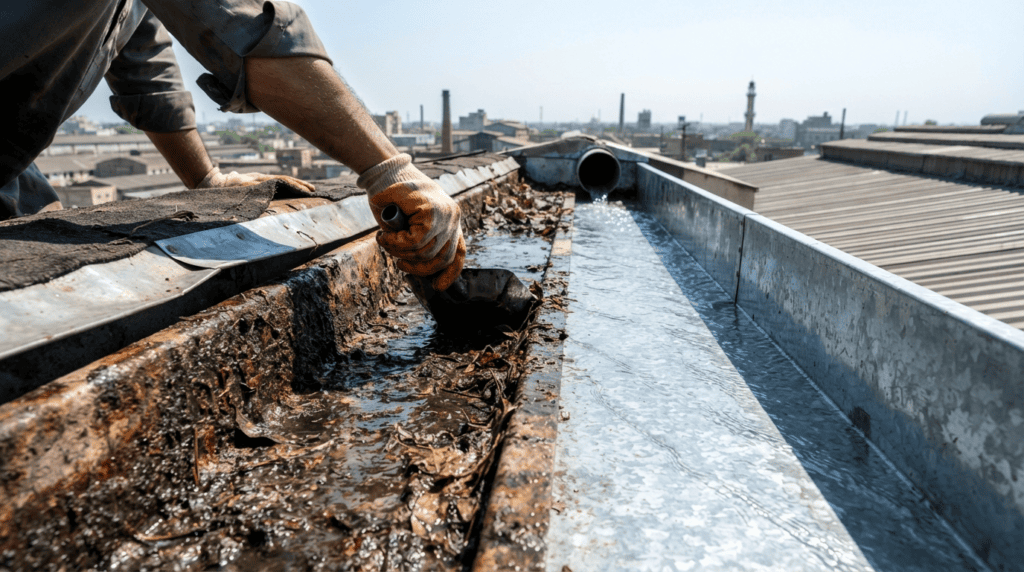
- Clear dust, droppings, plastic bags and leaves from gutters, valley gutters and outlet boxes before the first rain.
- Flush with a hose. Water should run to the downpipe and keep moving. Water that sits means a sag or a slope problem.
- Check seams, end caps and brackets for failing sealant and rust.
- Run water down every downpipe and watch where it ends up. It should carry away from the base of the wall, not pool against it.
- Ask what happens in a cloudburst: if this gutter fills, where does the overflow go?
- If your shed has valley gutters between bays, give them double attention. One blockage there can push water back under the laps and into the building.
- Don’t lean ladders on thin sheet-metal gutters. The GSA’s maintenance guidance warns against it.
Structure, base and surroundings
- Check column base plates and anchor bolts for rust, cracked grout and loose nuts.
- Keep soil, rubble, pallets and scrap from piling against the wall sheets. Wet mud against steel is a slow rust machine.
- Make sure the ground slopes away from the shed and the drains around it are open.
- Look for bent or sagging purlins, stretched bolt holes and cracked welds. Photograph anything odd and call an engineer. Don’t patch structure yourself.
- Check roller shutters, door seals and tracks so wind-driven rain doesn’t walk in through the front.
Electrics, stock and equipment
- Damp air and electricity don’t get along. Have a qualified electrician check distribution boards, earthing, cable glands and any lights or conduit fixed to the roof before the rains. Dampness, corrosion and short circuits are a familiar monsoon trio on industrial sites, which is why pre-monsoon guides for businesses, such as this one from Protium, put drains, gutters and equipment protection near the top.
- Raise stock off the floor on pallets and keep it a hand’s width away from walls so air can move.
- Move sensitive goods out from under any known drip zone, and cover outdoor machinery with proper rain protection.
Ventilation check
Spin every turbine ventilator by hand. Clear ridge vents and louvres of dust, bird nests and wasps. You’ll want that airflow in October, when condensation starts (more on that below).
Industrial shed monsoon maintenance: what to do while it rains
The rains are for watching, not for climbing.
- After each heavy spell, walk the inside and note every drip by bay and time. Photograph it. By September you’ll have a leak map your contractor will love.
- From the ground, check that gutters aren’t overflowing, water isn’t pooling at the base and mud isn’t banking against the walls.
- For an urgent drip, a bucket, a plastic sheet over the stock, or a dab of roof mastic on a clean, dry fastener head can hold things until a proper repair.
- If an active leak is near electrical equipment or critical stock, don’t wait for October. Call someone.
After the monsoon: the October repair round
By October the roof is dry, the heat has eased and you finally know where your shed leaked. This is the best repair window of the year. Use it.
1. Close out the leak log
Go back to every point on your map. Replace fasteners, renew sealant and fix flashings while the sheets are dry. Repairs done on damp metal tend to fail by the next storm.
2. Check for rust and coating damage
This is steel building maintenance that pays for itself. Wall and roof sheets rely on a zinc or zinc-aluminium coating, and rust starts where that coating is breached: scratches that reach bare steel, cut edges and drilled holes. Here’s how to read what you find.

- White or grey powder on galvanised surfaces: surface zinc corrosion, usually minor. Clean it and keep an eye on it.
- Orange-brown rust: bare steel is exposed. Deal with it now.
- Blistering or peeling paint: moisture is getting under the film.
- Rust streaks under fasteners: the washer or sealant has failed.
For a basic repair, remove loose rust with a wire brush or abrasive pad, clean and dry the steel, apply a zinc-rich primer or cold-galvanising compound, then finish with a compatible topcoat. Painting over loose rust hides the problem for a few weeks, not a few years.
Watch the mix of metals, too. Copper, brass and other metals touching or dripping onto galvanised sheets can set off galvanic corrosion. As BD+C points out, it isn’t always rust coloured, and it tends to attack the fasteners and the steel around them.
3. Re-tighten and re-seal
Check structural bolts, purlin cleats and door tracks. Roofs move, and things work loose. Re-seal anywhere the sealant has cracked.
4. Clear the silt
Flush gutters, sumps and drains again. Remove mud and plant matter from the wall bases. Wash panels with low-pressure water and mild detergent. Skip the pressure jet on roofs; it can drive water under laps and strip coatings.
5. Check the insulation
Check the insulation under the roof by hand and by eye. Damp or sagging insulation means either a leak or hidden condensation, and it keeps holding water against the sheet. Steel itself won’t grow mould, but wet insulation, cartons and timber nearby will, which makes this a health problem as well as a stock problem. Replace what’s wet instead of drying and refitting it.
6. Look at floors and foundations
After weeks of saturated ground, look for new cracks in floors, settlement around columns and soil washed away from the base. Give extra attention to crane runways and heavy machinery bays, as Pebsteel’s maintenance guidance does for factory floors and crane systems.
Shed condensation checklist: leak, or is the roof sweating?
From October, many sheds start to “sweat.” Clear nights cool the roof sheets quickly while the air inside stays warm and damp. When that air touches a surface colder than its dew point, water appears. Metal Construction News explains the two categories used in the metal building industry: visible condensation on exposed surfaces, and concealed condensation inside wall and roof assemblies, where it quietly rusts steel and soaks insulation.
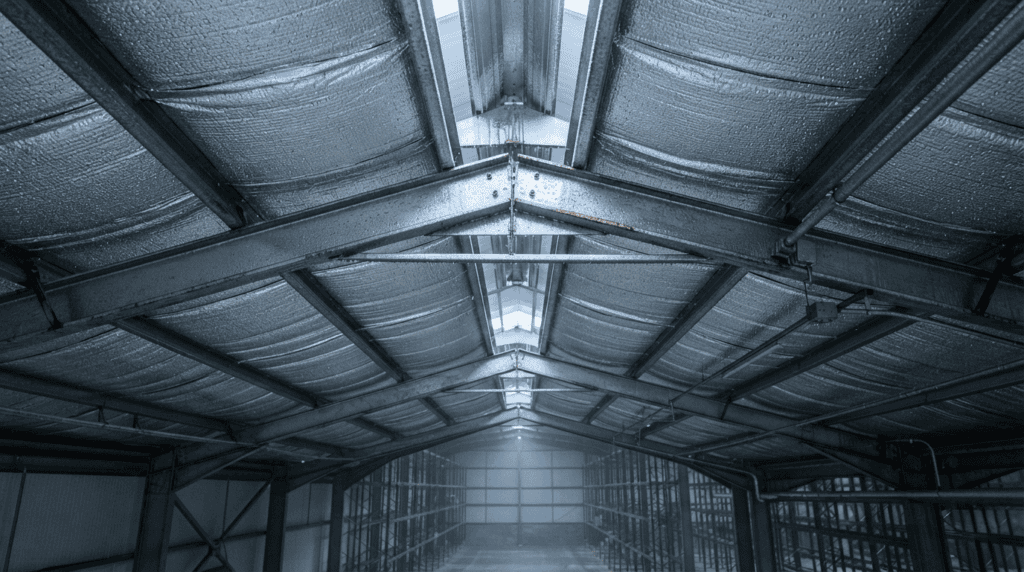
First, work out which problem you have.
| Clue | Roof leak | Condensation |
|---|---|---|
| When it happens | During or just after rain | Cool mornings, often with no rain at all |
| Where it shows | Under fasteners, laps, flashings and penetrations | Across the whole underside, dripping along purlins |
| Pattern | A few points, repeating in the same spots | Many points, worse in humid weather |
| Fix | Fasteners, sealant, flashings, sheets | Ventilation, insulation with a sealed vapour barrier, less moisture |
Then run through the checklist.
- Find the moisture. Wet floors, daily washdowns, stored produce, curing concrete, open drains, steam processes, livestock and gas heaters all add water vapour. Bare ground under or around a slab adds more.
- Open the airflow. Ridge vents, turbine ventilators and louvres only work if they’re clear and there’s a way for air to enter low in the building.
- Inspect the insulation. Your roof insulation should be continuous, with sealed joints and no gaps or tears along fastener lines. Bare metal patches are cold spots, and cold spots collect water. Wet insulation has to go.
- Stop damp air leaking in. Seal gaps around doors, cable entries and wall-to-roof junctions.
- Protect sensitive stock. Electronics, paper, packaging and spare parts may need a dehumidifier or desiccants.
- Measure, don’t guess. A cheap hygrometer helps. As a rough guide, corrosion speeds up when relative humidity stays above about 60 percent.
- Don’t use sealant to fix sweat. If the drips are everywhere, sealing a few screws won’t change a thing.
Steel building maintenance: the yearly rhythm and the logbook
| Task | How often |
|---|---|
| Walk-round: interior drips, gutters, base, drains | Monthly, and after every heavy spell |
| Gutter and downpipe clean | Before the monsoon, after it, and after dust storms |
| Roof walk, fasteners and sealant | Twice a year |
| Rust and coating touch-ups | Once a year, ideally in October |
| Ventilator and vent service | Twice a year |
| Electrical safety check | Before the monsoon |
| Engineer’s structural check | Yearly for heavy-duty or older sheds, and after any impact, fire or modification |

Keep a log. One page per inspection: date, weather, bay number, photo, finding, action taken, who did it and when to check again. Steel-building suppliers such as Zamil Steel recommend a maintenance log book, and it’s the most useful thing you can hand a contractor, an insurer or the next facility manager.
Mistakes that quietly cost sheds money
- Pressure-washing the roof. It forces water under laps and strips coatings.
- Painting over rust. It looks fine until the first humid week.
- Silicone on everything. Mixed sealants peel, and they make later repairs harder.
- Adding solar, ducting or signage without a plan. Rooftop solar is now common on sheds across Pakistan, and every clamp or drilled hole is a potential leak. Use proper roof clamps, seal each penetration, and have an engineer check the extra load and wind uplift first.
- Blocking the vents. Stock stacked against walls and under ventilators stops the airflow you need.
- Treating small drips as cosmetic. Small leaks soak insulation, rust fasteners and eventually find your electrics.
DIY, or call a professional?
Handle in-house: cleaning gutters from a safe platform, keeping the log, washing panels, replacing a handful of fasteners where access is safe, and touching up small scratches.
Call a professional when you see sagging sheets or purlins, cracked welds, corroded or bent base plates, stretched bolt holes, leaks that return after repair, widespread rust, or any task that needs work at height without proper fall protection. The same goes for extending the shed, hanging heavy equipment from the frame, or installing solar.
If you’d like a second pair of eyes, the Steel City team can inspect your shed and give you a photo-backed report with repair priorities, across Punjab, including Lahore, Faisalabad, Multan, Gujranwala, Sialkot and Rawalpindi. Message us on WhatsApp or request an inspection.
Frequently asked questions
How often should a steel shed be inspected in Pakistan?
At least twice a year: once before the monsoon (May to early June) and once after it (October). Add a quick check after any heavy rain, hail or windstorm. Sheds in harsher environments, such as near chemical stores, tanneries or poultry houses, may need an extra mid-season look.
When should I start monsoon preparation for an industrial shed in Punjab?
In May or early June. Aim to finish before the first PMD or PDMA alert, because the start date and the spells shift from year to year.
How do I find a leak in a steel shed roof?
Switch off the lights and look for daylight through the roof, trace stains and rust trails uphill, walk each fastener row if the roof is safe, then confirm with a hose test, one section at a time, with a helper inside. Most leaks start at fasteners, laps, flashings and penetrations rather than mid-sheet.
Why is water dripping inside my shed when it hasn’t rained?
Most likely condensation. Warm, damp air is meeting a cold roof, especially on clear, cool mornings. Check ventilation, insulation gaps and moisture sources before you touch the roof sealant.
How often should I do a shed gutter inspection?
Before the monsoon, after it, and after any dust storm or cloudburst. Sheds near trees, dusty yards or construction sites may need it more often.
Can I paint over rust on a steel structure?
Not over loose rust. Brush or abrade it off, clean and dry the steel, apply a zinc-rich primer or cold-galvanising compound, then topcoat. Heavy corrosion on structural members needs an engineer’s opinion before any painting.
Can a small roof leak damage the shed’s structure?
A leak on its own doesn’t bring a steel roof down. But repeated wetting corrodes fasteners, purlins and connections, and that’s how a small drip turns into a structural question.
How long can a steel shed last with good maintenance?
Decades, in many cases, but there’s no honest single number. It depends on the coating system, sheet thickness, workmanship, drainage and the local environment. Regular inspection and quick repairs stop minor coating damage becoming structural damage.
How much does steel shed maintenance cost in Pakistan?
It varies with shed size, height, access and what the inspection finds, so ask for a written, itemised quote. As a rule, replacing a few fasteners in May costs far less than replacing wet stock and insulation in July.
The one-page checklist
Before the monsoon (May to mid-June)
- Roof walk: fasteners, laps, flashings, penetrations.
- Daylight test from inside, with every spot logged by bay.
- Gutters, valley gutters and downpipes cleared and flushed.
- Base plates, anchor bolts, ground slope and debris against the walls checked.
- Electrics inspected by a qualified electrician.
- Vents and turbine ventilators clear, stock raised and covered.
During the rains
- Leak diary after each heavy spell, and no roof climbing in the wet.
After the monsoon (October)
- Every logged leak fixed while the roof is dry.
- Rust and coating touch-ups done, bolts re-tightened, laps re-sealed.
- Silt flushed out, wet insulation replaced, floors and foundations checked.
- Condensation checklist run before the cold nights and fog arrive.
Do those eleven things every year and you’ll spend the next monsoon watching the weather forecast instead of the ceiling.