
How to Calculate Industrial Shed Price Per Sq Ft in Pakistan (2026 Complete Guide)

Pakistan’s industrial sector is expanding at a pace not seen in years. New textile units are coming up across Faisalabad’s M3 Industrial City, warehousing demand is surging in Gujranwala and Lahore, and agricultural processing infrastructure is expanding across Multan and Bahawalpur. For every factory owner, developer, and procurement manager navigating this growth, one question comes up in every project brief:
what is the industrial shed price per sq ft in Pakistan?
The answer depends on more than just material. Steel grade, insulation specification,
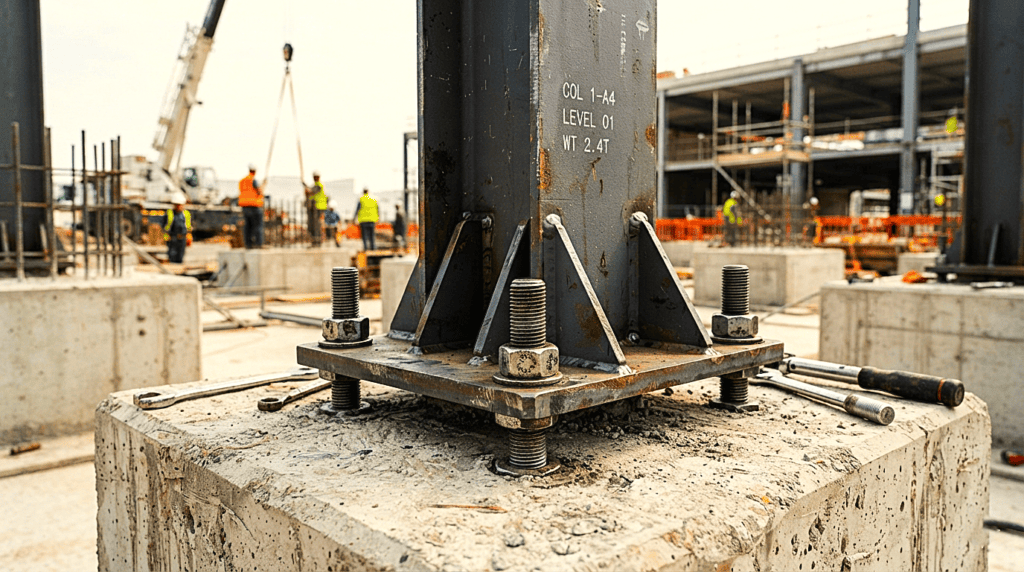
foundation type, site location, and the extras you build in — all of these move the number. Get them wrong in your budget and you are looking at cost overruns that stall a project or force quality compromises that cost more in the long run.
This guide gives you a complete steel sheds price list for Pakistan in 2026, a clear comparison of galvanized steel versus mild steel versus fiber options, a breakdown of warehouse construction cost variables, and a real-world project example you can use as a planning benchmark. By the end, you will know exactly how to read a supplier’s quote and where to push back.
What Drives Industrial Shed Price Per Sq Ft in Pakistan?
Before looking at numbers, you need to understand the five variables that determine where your project lands on the price range. Every quote you receive from a supplier is a function of these factors — knowing them lets you compare quotes like an engineer, not just a buyer.
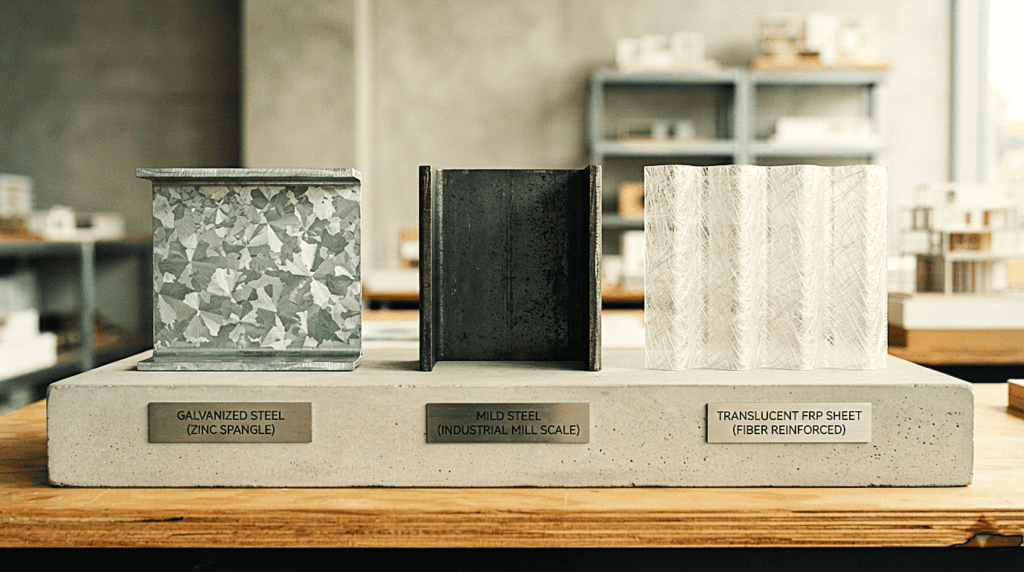
1. Material Choice: Galvanized Steel, Mild Steel, or Fiber.
The single biggest cost lever in any shed project is the structural material. Pakistan’s market offers three main options, each with a different price point, lifespan, and maintenance profile.
Galvanized Steel: is the benchmark material for premium industrial sheds in Pakistan. The galvanization process coats the steel with a layer of zinc, making it highly resistant to rust and corrosion — critical in cities like Gujranwala and Lahore where monsoon humidity accelerates oxidation on unprotected steel. Galvanized steel costs more upfront, but when you factor in the near-zero repainting requirement and the structural lifespan of 30 or more years, it consistently delivers the lowest lifetime cost for any shed built for permanent or long-term use.
Mild Steel: is a cost-accessible alternative that works well for short-to-medium-term projects and budget-constrained builds. The lower upfront price per sq ft is genuinely attractive, but it comes with a maintenance obligation — mild steel requires protective painting every three to five years, and in Faisalabad’s humid summers or Gujranwala’s monsoon season, corrosion can develop faster than expected if maintenance is delayed. For any shed where the structure is expected to operate beyond 10 years, galvanized steel is the more economical choice over the full lifecycle.
Fiber Sheds:occupy the entry-level segment of Pakistan’s market. They are lightweight, fast to assemble, and available at the lowest price per sq ft on the market. For temporary warehousing, seasonal storage, or low-value goods that do not require climate control or structural resilience, fiber sheds are a practical solution. Their limitations are significant for anything more demanding: a structural lifespan of 5 to 10 years, vulnerability to heavy wind and hail — a real concern in Punjab’s storm season — and poor thermal performance that makes them unsuitable for any application where goods or occupants are sensitive to heat.
The key principle: match your material to your project’s operational life and use case. Do not choose fiber because galvanized steel costs more per sq ft if your project will run for 15 years. The math does not work in your favor.
2. Shed Size and Design Complexity
Shed area and layout design directly affect your per sq ft cost through two mechanisms: economies of scale and engineering complexity.

Economies of scale work strongly in shed construction. A 20,000 sq ft warehouse in Faisalabad will almost always have a lower price per sq ft than a 2,000 sq ft workshop, because the fixed costs of mobilization, site management, crane use, and structural engineering are spread across a much larger area. If you are planning a shed that will eventually need to be expanded, it is often worth building larger at the outset rather than adding bays later — both because the initial per sq ft cost is lower and because future expansion typically carries its own mobilization costs.
Design complexity adds cost at the engineering and fabrication level. A simple rectangular portal frame shed is the most efficient structure to design, fabricate, and erect. The moment you add internal partitions for offices or quality control rooms, crane beam systems, fire exit lobbies, loading bay canopies, or mezzanine floors, you are adding engineering hours, specialized components, and additional labor — all of which translate directly into a higher price per sq ft. These additions are often necessary, but they should be costed separately and explicitly rather than absorbed into a vague “custom” line item.
3. Roofing and Wall Cladding Options
Your roofing and cladding specification affects both the upfront cost and the running cost of the building. This decision matters particularly in Punjab, where summer temperatures regularly exceed 45°C and monsoon rains can be heavy and sustained.
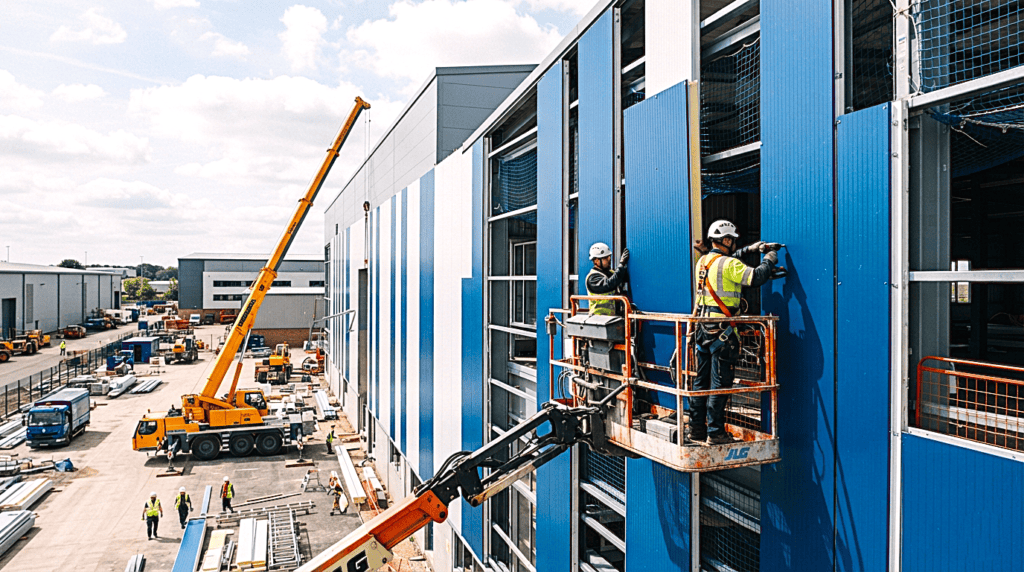
Sandwich Panels (Composite Insulated Panels) are the premium cladding choice for Pakistan’s climate. These multi-layer panels — with a rigid insulation core bonded between steel facings — significantly reduce heat transfer through the roof and walls. For factories in Faisalabad where machinery generates additional heat, or warehouses storing temperature-sensitive goods, sandwich panels can substantially reduce air conditioning load and protect product quality. The upfront cost is higher than single-skin alternatives, but the ROI through reduced electricity bills and better working conditions is measurable and significant.
Single-Skin Profiled Steel Sheets are the standard cladding for budget-driven industrial projects. They are cost-effective, widely available, and structurally adequate for basic applications. For general storage where climate control is not a factor, single-skin sheets are a practical default. For manufacturing environments or warehouses storing perishable goods or precision machinery, the thermal performance gap relative to sandwich panels is worth budgeting carefully.
4. Foundations and Civil Works
Foundation costs are one of the most commonly underestimated items in industrial shed budgets — and one of the most variable. Getting this wrong can result in structural settlement, floor cracking, or in severe cases, the need for expensive remediation work.
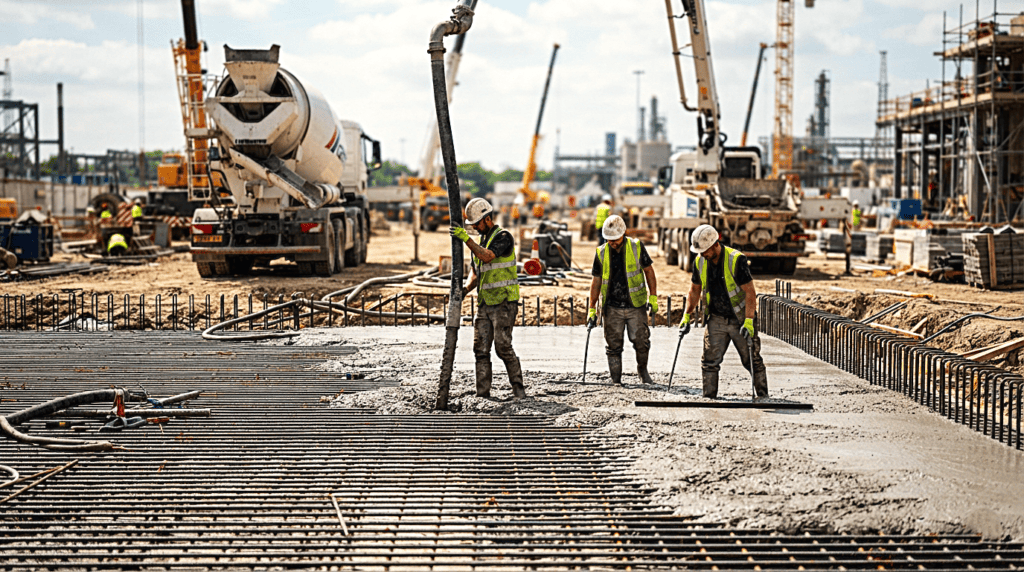
Soil type and site conditions determine what your foundation needs to achieve. In Gujranwala and parts of Lahore, clay-heavy soils with high moisture content require deeper foundations or pile systems to prevent differential settlement under load. Sandy or loose fill soils — common on newly developed industrial plots — may need ground improvement or reinforced concrete raft foundations. Rocky or uneven terrain requires excavation and ground preparation before any structural work can begin.
Foundation type spans a wide cost range. Simple anchor bolt foundations suit lightweight or temporary structures with low floor loads. Heavy manufacturing environments, high-bay warehouses with racking systems, and sites with vehicle traffic require reinforced concrete floor slabs — and the specification of that slab (thickness, reinforcement, surface finish) should be determined by a geotechnical assessment, not a rule of thumb.
Budget 10 to 25% of your structural shed cost for civil works. If your site is on soft, waterlogged, or previously disturbed ground, get a geotechnical report before committing to any project budget.
5. Additional Features and Upgrades
The final layer of cost comes from the functional and safety features that turn a steel frame into an operational industrial building. Common additions and their impact on price per sq ft include:

- Turbo ventilators and ridge vents: Essential for heat-intensive manufacturing environments. Add PKR 50–100/sq ft depending on specification.
- Polycarbonate skylights: Reduce daytime electricity consumption by bringing natural light into the shed. A well-designed skylight layout can meaningfully reduce lighting costs.
- Motorized industrial doors: Required for high-throughput logistics and large vehicle access. Cost depends on door size and automation specification.
- Fire-resistant coatings and passive fire protection: Often required by industrial zone regulations and insurance policies.
- Security grilles and perimeter features: Relevant for high-value goods storage and sites in areas with security requirements.
- Mezzanine floors: Where vertical space allows, a steel mezzanine can effectively double usable floor area at a fraction of the cost of building a second structure.
Each of these features adds to your price per sq ft but increases the building’s functionality, safety compliance, or long-term value. Request an itemized quote for base structure and each add-on separately — this makes comparison between suppliers straightforward and lets you phase non-critical upgrades if budget requires.
Steel Sheds Price List Pakistan 2026 — Full Material Comparison
The table below is the most current steel sheds price list for Pakistan based on 2026 market rates. Prices are per square foot for large-order projects in major industrial cities. Smaller orders, remote sites, or projects requiring significant customisation will carry additional costs.
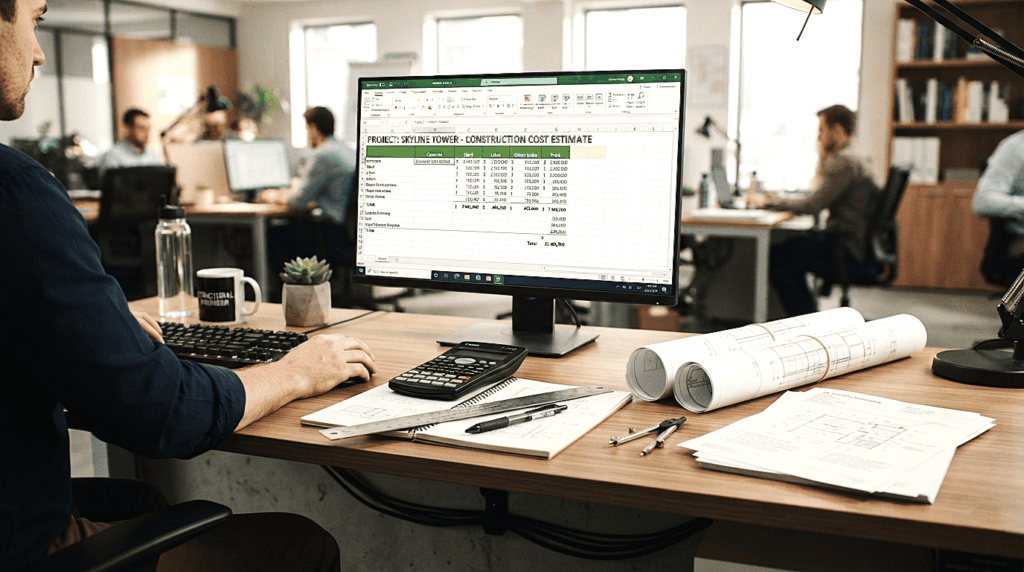
| Material Type | Price (PKR/sq ft) | Lifespan | Best Application | Maintenance Level |
| Galvanized Steel | 1,900 – 2,500 | 30+ years | Long-term factories, warehouses | Low |
| Mild Steel | 1,600 – 2,100 | 20+ years | Budget projects, short-medium term | Medium |
| Fiber / GI Fiber | 1,200 – 1,700 | 5–10 years | Temporary storage, seasonal use | Medium-High |
| Galvanized + Sandwich Panel | 2,300 – 3,000 | 30+ years | Climate-sensitive factories, food/pharma | Low |
| Pre-Engineered Building (PEB) | 2,500 – 3,500 | 30–50 years | Large-span warehouses, industrial parks | Low |
Important notes on this price list:
- Figures reflect 2026 rates for orders of 5,000 sq ft and above in Lahore, Faisalabad, and Gujranwala
- Remote project sites in South Punjab (Multan, Bahawalpur, Rahim Yar Khan) carry logistics surcharges of PKR 100–200/sq ft depending on distance
- Foundation and civil works are not included — add 10–25% of structural cost
- All figures exclude GST
Fiber Shed Price in Pakistan — When It Makes Sense (And When It Doesn’t)
The fiber shed price in Pakistan at PKR 1,200–1,700 per sq ft makes it the most accessible entry point in the market. For the right application, fiber sheds are a legitimate and cost-effective solution. For the wrong one, the initial saving is quickly erased by maintenance, replacement, and downtime costs.
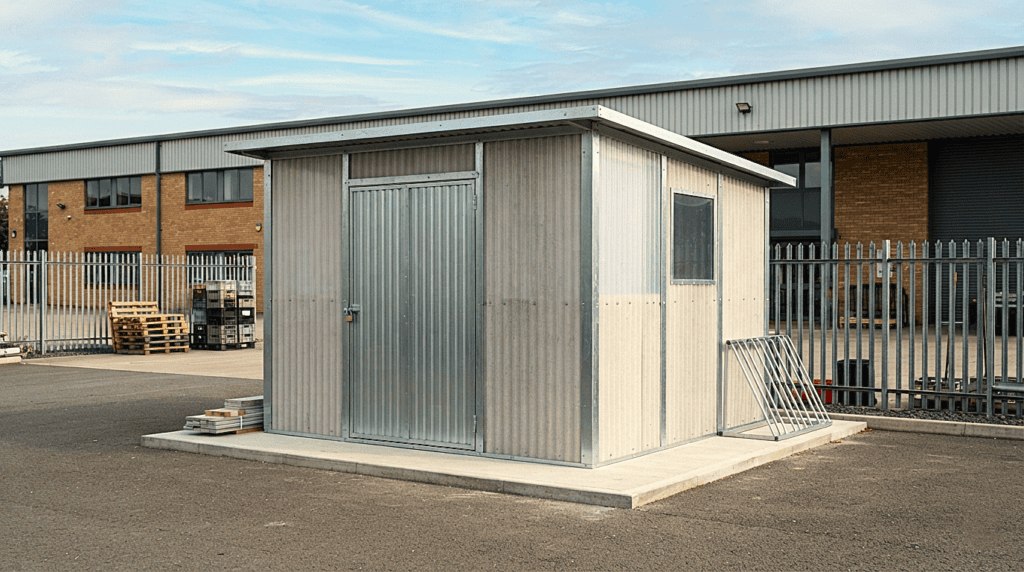
Use fiber sheds when:
- The structure is temporary by design (12–36 months)
- The stored goods are low-value and non-sensitive to temperature or humidity
- The site is in a sheltered location with limited wind or storm exposure
- You need to deploy quickly with minimal civil works
Avoid fiber sheds when:
- The shed will be in continuous use for more than five years
- The contents are high-value, perishable, or machinery
- The site is in a location with significant wind, storm, or flood risk
- You need the structure to meet industrial zone safety or insurance requirements
In Gujranwala’s humid climate and Faisalabad’s industrial zones, fiber sheds used beyond their intended lifespan are a common source of unplanned replacement costs. Budget for the material that matches your actual project duration.
Warehouse Construction Cost in Pakistan — Real Project Example
Understanding per sq ft rates is only part of the picture. Here is a real-world warehouse construction cost breakdown for a project in Gujranwala that illustrates how the full budget comes together.
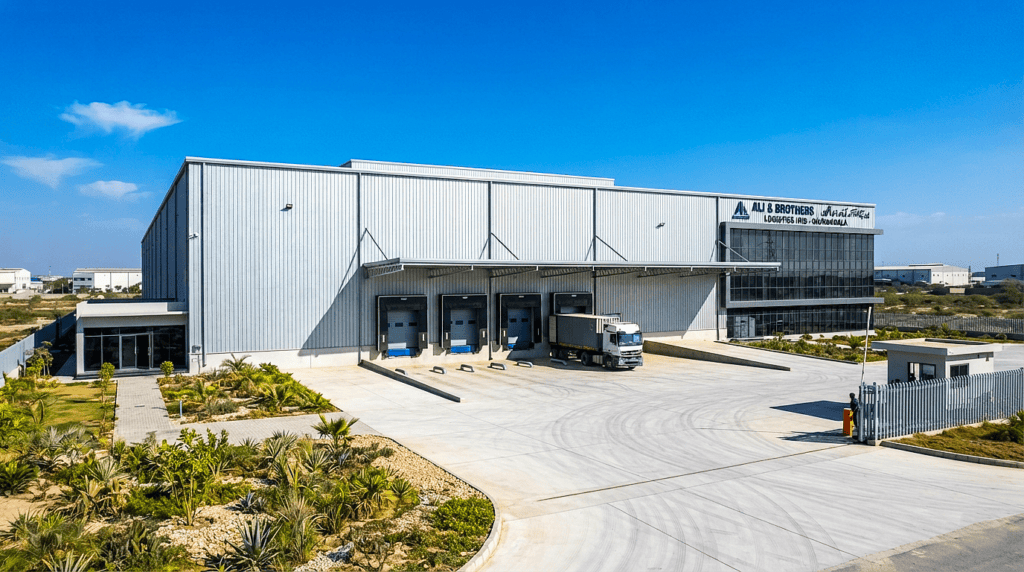
Project Specification:
- Location: Gujranwala Industrial Estate
- Covered Area: 10,000 sq ft
- Structure: Galvanized steel portal frame
- Cladding: Single-skin profiled steel sheet, walls and roof
- Foundation: Reinforced concrete slab (medium specification for moderate floor loads)
- Extras: 4 turbo ventilators, 8 polycarbonate skylight panels, 1 motorized roller shutter door
Cost Breakdown (2026 rates):
| Item | Rate | Amount (PKR) |
| Galvanized steel structure + erection | PKR 2,200/sq ft | 22,000,000 |
| Foundation and concrete floor slab | 12% of structure cost | 2,640,000 |
| Turbo ventilators (4 units) | PKR 35,000 each | 140,000 |
| Polycarbonate skylight panels (8 units) | PKR 18,000 each | 144,000 |
| Motorized roller shutter door (1 unit) | Lump sum | 280,000 |
| Site preparation and earthworks | Lump sum | 350,000 |
| Total Estimated Project Cost | PKR 25,554,000 | |
| Per sq ft all-in | PKR ~2,555/sq ft |
Key observations from this example:
- The base structure is the largest cost line, but extras added 4.3% to the total — less than many buyers expect
- Foundations and civil works added 12% — exactly in the middle of the 10–25% range, reflecting moderate soil conditions typical of Gujranwala Industrial Estate
- The all-in per sq ft cost of PKR ~2,555 is meaningfully higher than the base rate of PKR 2,200 — this gap is where many buyers are surprised if they only price the structure
For projects in Faisalabad, similar specifications typically deliver 3–5% lower material costs due to better steel supply logistics, but comparable civil works costs.
How Punjab’s Climate Affects Your Material Decision
No industrial shed pricing guide for Pakistan is complete without addressing climate — because the climate directly determines the true cost of your material choice over the building’s life.
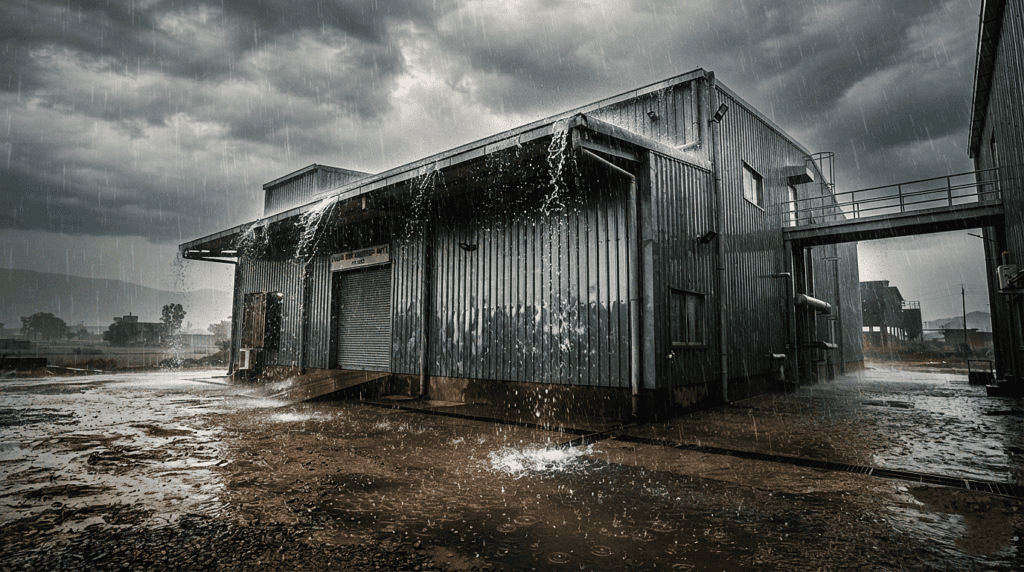
Lahore and Gujranwala experience hot, humid summers and heavy monsoon rains. Moisture-accelerated corrosion on mild steel is a documented issue in both cities. Galvanized steel’s zinc coating specifically addresses this — it forms a sacrificial barrier that prevents rust even when the coating is scratched or abraded during operational use.
Faisalabad adds extreme heat to the equation. Summer temperatures regularly exceed 45°C in June and July. Single-skin steel roofing without insulation can create internal temperatures that make certain manufacturing processes impossible and significantly reduce worker productivity. If you are building in Faisalabad for a use case that involves people or heat-sensitive processes, sandwich panel cladding is not a luxury — it is an operational requirement.
Multan and South Punjab present the most extreme thermal challenge in Pakistan’s industrial belt. Summer temperatures above 48°C are routine, and high solar radiation intensifies heat gain through uninsulated roofing. For any permanent industrial building in South Punjab, high-performance insulated cladding and additional mechanical ventilation are essential from the design stage.
Sialkot combines moderate temperatures with significant humidity from its proximity to the hills. Corrosion protection is relevant, but thermal specification is less extreme than Faisalabad or Multan.
The practical implication: the right shed specification for your city is not necessarily the same as the right specification for another city. A fiber shed that performs adequately in a dry northern climate will degrade significantly faster in Gujranwala’s monsoon conditions.
How to Compare Industrial Shed Quotes Effectively
Getting multiple quotes is essential. Knowing how to read them is equally important. Follow this process:
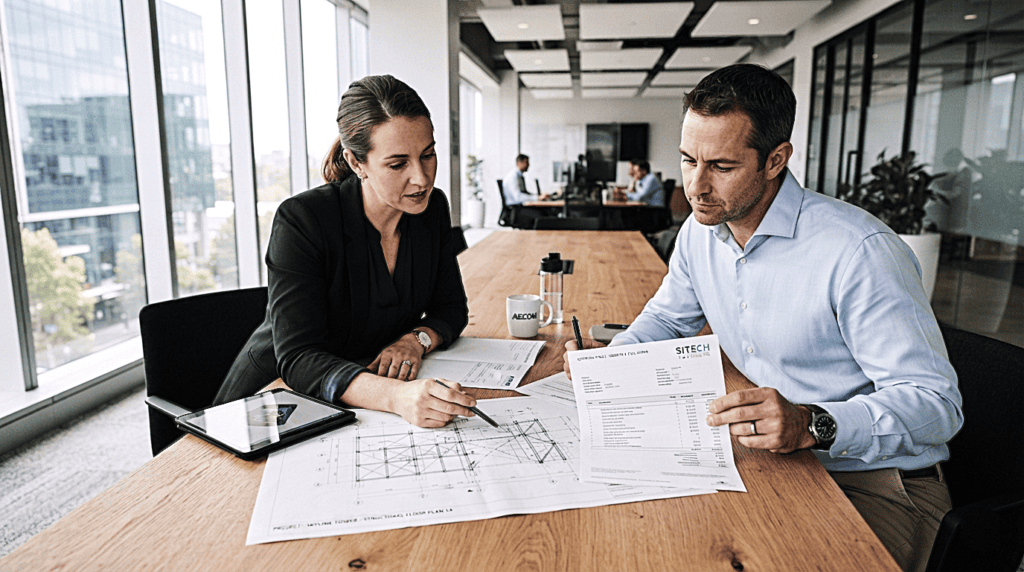
1. Require fully itemized quotes. A quote that gives you a single per sq ft rate with no breakdown makes comparison impossible. Request line-item pricing for: structural steel, cladding (roof and wall separately), foundation works, doors and windows, extras, delivery and erection, and warranty terms.
2. Compare steel grade, not just price. Ask each supplier to specify the steel grade, wall thickness (gauge), and galvanization standard (if applicable). A low per sq ft rate from a supplier using light-gauge mild steel is not comparable to a higher rate from a supplier using heavy-gauge galvanized structural steel.
3. Check warranty terms explicitly. A structural warranty of 10 years means something different from a 2-year warranty. Ask what the warranty covers and what it excludes.
4. Verify local project references. A supplier with completed projects in your city understands local soil conditions, logistics, and installation requirements. Ask for references from projects in your specific industrial zone or district.
5. Negotiate on timing, not just price. Punjab suppliers frequently offer discounts on bulk orders and during off-peak fabrication periods (typically November to February when construction activity slows). If your timeline is flexible, a seasonal discount can be as valuable as a structural upgrade.
6. Include contingencies in your budget. Build a 10% contingency on top of your total project estimate. Civil works surprises — particularly soil conditions that require deeper foundations — are the most common source of cost overruns in shed projects.
Frequently Asked Questions
What is the average industrial shed price per sq ft in Pakistan in 2026?
For galvanized steel sheds, the price ranges from PKR 1,900 to PKR 2,500 per sq ft for the structure. All-in project costs — including foundation, civil works, and standard extras — typically land between PKR 2,400 and PKR 3,000 per sq ft depending on specification and location.
What is the fiber shed price in Pakistan in 2026?
Fiber sheds are priced between PKR 1,200 and PKR 1,700 per sq ft for supply and installation. Foundation requirements are minimal, keeping total project costs lower, but the shorter lifespan and maintenance profile should be factored into the total cost of ownership comparison.
What is the warehouse construction cost for a 10,000 sq ft shed in Gujranwala?
Based on 2026 rates and the project example detailed above, a 10,000 sq ft galvanized steel warehouse in Gujranwala with standard specification, reinforced concrete floor, and basic extras comes to approximately PKR 24 to 27 million all-in. Per sq ft, this equates to PKR 2,400 to 2,700 depending on final specification.
Why is galvanized steel the preferred choice over mild steel for industrial sheds in Punjab?
Galvanized steel’s zinc coating prevents rust and corrosion — a critical property in Punjab’s humid summers and monsoon season. Mild steel requires periodic repainting to maintain corrosion protection, and if maintenance is deferred, degradation can be rapid. For any shed with a planned life of more than 10 years, galvanized steel delivers lower total cost of ownership despite the higher upfront price per sq ft.
How much do foundations add to the warehouse construction cost?
Foundation and civil works typically add 10 to 25% to the structural shed cost. The range reflects the significant variation in site conditions across Punjab. Standard industrial plot soils in established zones like Faisalabad’s M3 or Gujranwala Industrial Estate tend toward the lower end. Soft, waterlogged, or clay-heavy sites — more common on newly developed or agricultural land — trend toward the upper end and may require specialist geotechnical input.
Can Steel City supply industrial sheds outside Lahore and Faisalabad?
Yes. Steel City manufactures and installs industrial sheds, warehouses, and pre-engineered buildings across all major Punjab cities including Gujranwala, Sialkot, Multan, Rawalpindi, Bahawalpur, and Sargodha. Delivery and logistics costs are factored into project quotes based on site location.
Get Your Industrial Shed Price Per Sq Ft — Contact Steel City
Steel City is Pakistan’s specialist in prefabricated industrial buildings, galvanized steel sheds, and pre-engineered building (PEB) solutions. Our engineering team has delivered industrial sheds across Lahore, Faisalabad, Gujranwala, Multan, Rawalpindi, and remote project sites throughout Punjab.
Every quote we provide is itemized, fixed-price, and backed by a delivery commitment and structural warranty. No vague estimates. No hidden costs added at the final invoice stage.
To get your customized industrial shed price per sq ft — based on your exact area, material specification, site location, and timeline — contact Steel City’s engineering team directly via WhatsApp or phone. Share your requirements and receive a detailed, fixed-price project quote within 24 hours.
Build for Pakistan’s climate, Build for the long term, Build with Steel City.