
A good dairy shed can be the difference between a herd that thrives and one that struggles through every summer. Pakistan’s climate puts real stress on dairy cattle, goats, and poultry alike, from scorching heat across Punjab and Sindh to thick monsoon humidity and the dust storms that roll in before the rains. Many traditional Dairy Shed Design were never built with these swings in mind, and the result shows up as lower milk yields, higher vet bills, and animals that gain less weight than they should.
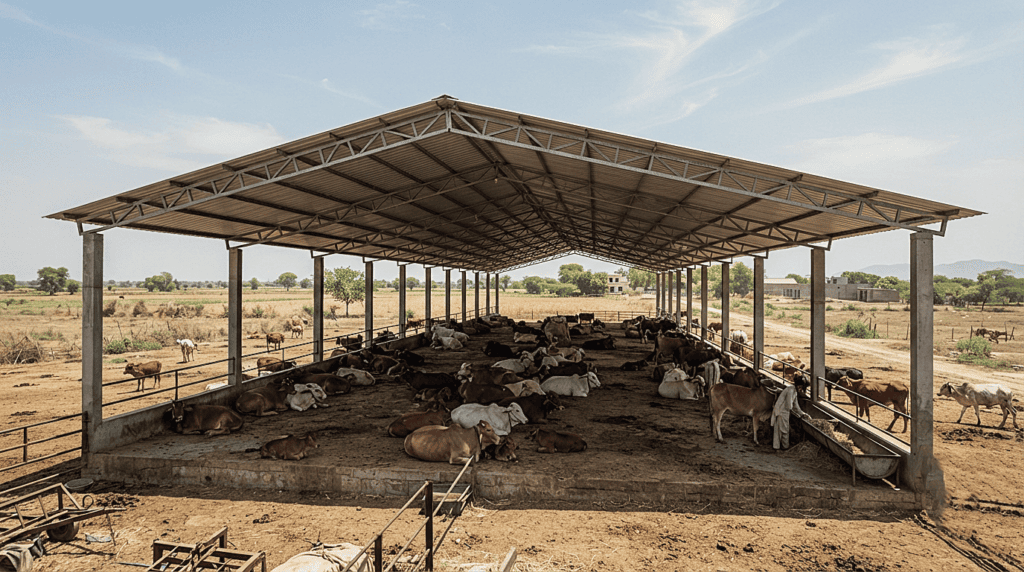
The right dairy shed design changes that equation. With smart ventilation, the correct roofing material, and a layout that respects how animals actually move and rest, a shed can stay noticeably cooler even in peak summer. This guide walks through what genuinely works on Pakistani farms, from the plains of South Punjab to the cooler districts up north.
Why Pakistan’s Climate Demands a Different Approach to Dairy Shed Design
Pakistan doesn’t have one climate, it has several, and a dairy shed design that works in Lahore won’t necessarily suit a farm near Multan. Summer afternoons across South Punjab routinely climb well above 40°C, with peak heat in the hottest districts reaching the high 40s, causing real heat stress that cuts milk production and slows weight gain in young stock.
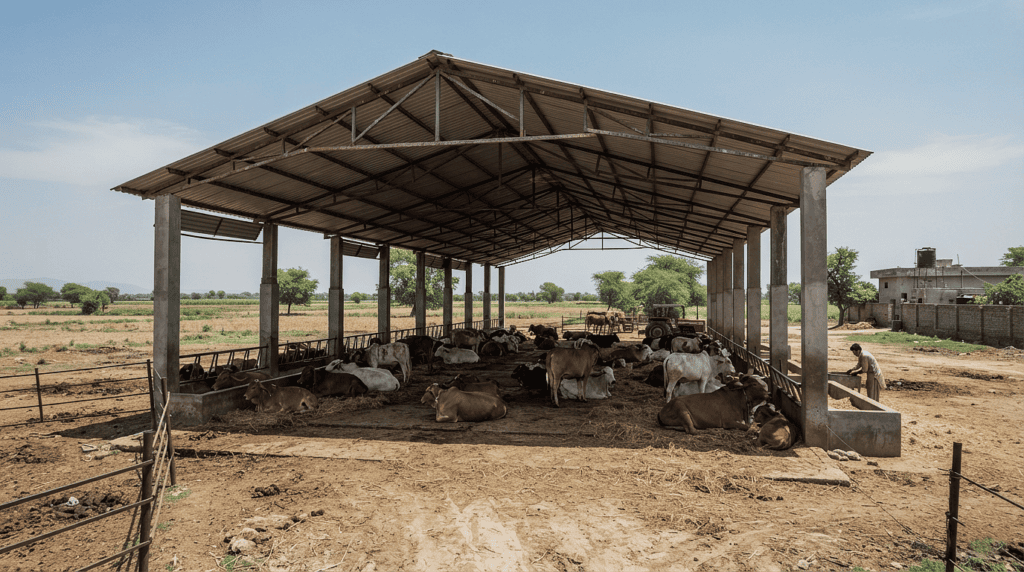
Add monsoon humidity from July through September, and animals get little relief even after dark. Dust storms compound the problem: open-sided structures without proper wind breaks let fine dust settle into feed and water troughs, raising the risk of respiratory issues and mastitis. A shed built for Pakistan’s climate has to manage heat, humidity, and dust together.
Not every region needs the same protection, though. Cooler areas like the Potohar plateau need far less heat mitigation than South Punjab, and even heat-tolerant breeds like Sahiwal and Cholistani cattle still do better when the shed itself helps with cooling.
Core Elements of a Climate-Smart Dairy Shed Design
Every high-performing dairy shed design in Pakistan rests on the same four pillars: ventilation, roofing, orientation, and drainage. Get these right and the shed does most of the cooling work on its own, long before you add a single fan.
Ventilation That Actually Works in Summer Heat
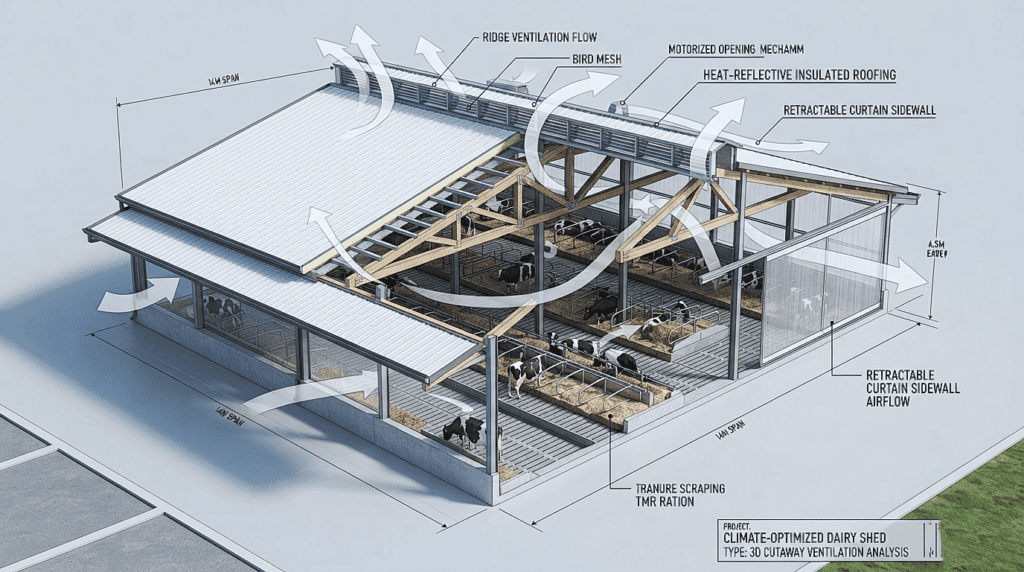
Ventilation is the single most important factor in any livestock shed, and it’s the one most often done badly. Solid walls and a low roof trap hot air right where the animals stand, raising body temperature and stress within hours.
The fix is usually structural rather than mechanical:
- Raise the roof ridge height so hot air has somewhere to rise and escape
- Use open or louvered side walls that catch prevailing wind instead of blocking it
- Install ridge vents or turbo ventilators along the roofline to pull warm air out continuously
- Space stalls and feeding areas to avoid dead air pockets where heat and ammonia build up
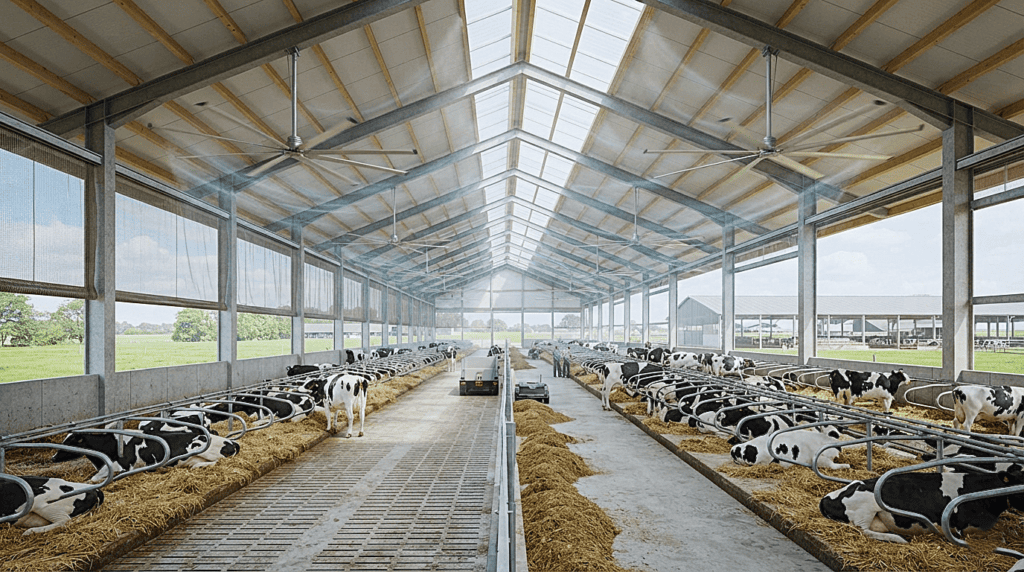
Fans and misting systems help on the worst days, but they work best as a supplement to good passive ventilation, not a replacement for it. Shade trees along the western wall add another low-cost layer of protection.
Heat-Resistant Roofing That Cuts Indoor Temperatures
Roofing material affects shed temperature more than almost any other design choice. A heat-resistant roof reflects solar radiation instead of absorbing it and radiating that heat back down onto the animals below.
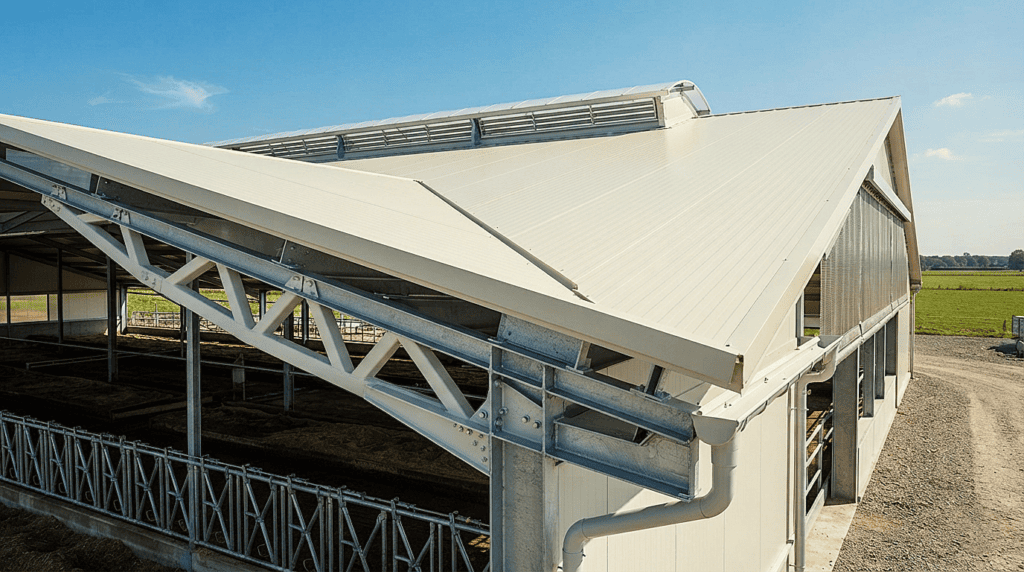
Common options for Pakistani farms include:
- PPGI (pre-painted galvanized iron) sheets with a reflective top coat, a common balance of cost and performance
- Insulated sandwich panels, with a foam core between two steel skins, for a much bigger drop in indoor temperature
- Double-layer roofing with an air gap, a simple way to cut heat transfer without the cost of a full insulated panel
Light-colored roofing reflects more heat than dark cladding, and a modest roof overhang keeps direct sun off the walls during the hottest part of the day. Regular checks for rust and loose fasteners keep a heat-resistant roof performing as designed.
Orientation, Spacing, and Drainage
Shed orientation matters more than many farm owners realize. Positioning the long axis east-west limits direct sun on the broad side walls during the hottest hours, keeping the whole structure cooler without spending a rupee on materials.
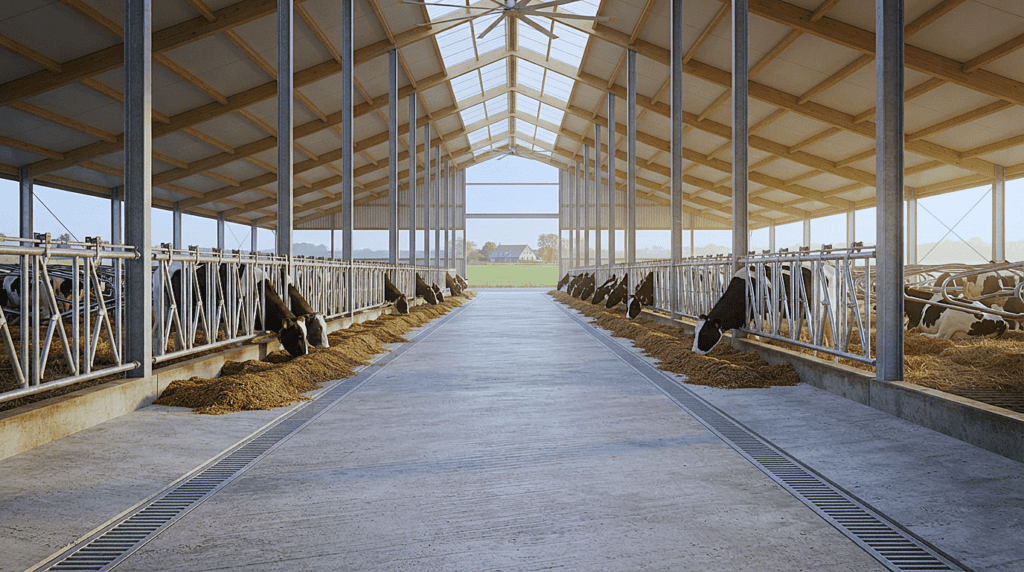
Flooring and drainage deserve equal attention. A slightly sloped floor with proper drains keeps waste and wash water moving away from where animals stand, cutting down on both smell and the damp conditions that encourage hoof problems and flies.
Steel-Frame Sheds vs Traditional Construction
Traditional dairy sheds in Pakistan are often built with brick walls, wooden trusses, and plain corrugated iron sheeting. These materials are familiar and cheap upfront, but they come with real downsides: timber attracts termites, brick construction takes weeks to cure, and plain iron sheeting turns scorching hot with no insulation layer to slow the heat.
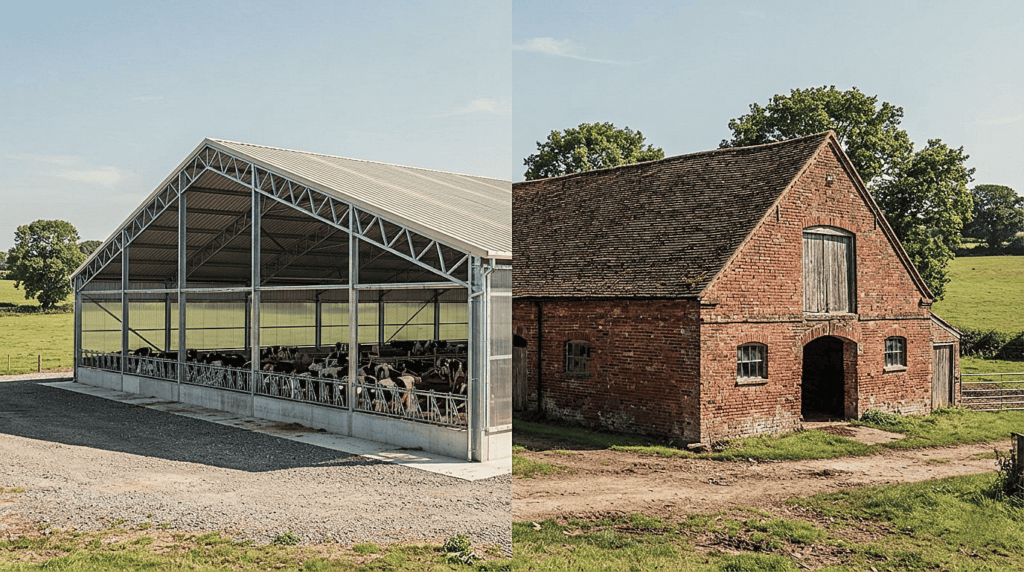
Pre-engineered steel buildings take a genuinely different approach. Frames go up faster and span wider open areas without internal columns, which matters when cattle need room to move and feed together, and they resist rot and rust far better than timber or untreated iron. Builders who specialize in pre-engineered steel structures factor in insulated panels and ridge ventilation at the design stage, rather than bolting climate fixes on afterward.
For a dairy or livestock shed specifically, the real advantage of steel framing is flexibility. You can widen bays for a larger herd, add mezzanine storage for feed, or extend the structure later without tearing down what you already built.
Livestock Sheds and Pre-Engineered Poultry Farm Sheds: One Farm, Different Needs
Not every farm is a pure dairy operation. Many Pakistani livestock owners run mixed setups, cattle, goats, and poultry on the same property, each with different shed requirements.
Poultry needs the tightest climate control of the three. Pre-engineered poultry farm sheds typically use continuous ridge ventilation, higher airflow at bird height, and roofing that keeps temperature stable, since birds are more sensitive to heat stress than cattle. Goats and sheep need less floor space per animal but still benefit from raised platforms and good airflow in humid months.
Buffaloes make up a large share of Pakistan’s dairy herd and cope with heat differently than cattle. Many prefer wallowing or a regular wash-down over dry shade alone, so a dairy shed design in Punjab often includes a wash area or shallow wallow next to the main shelter.
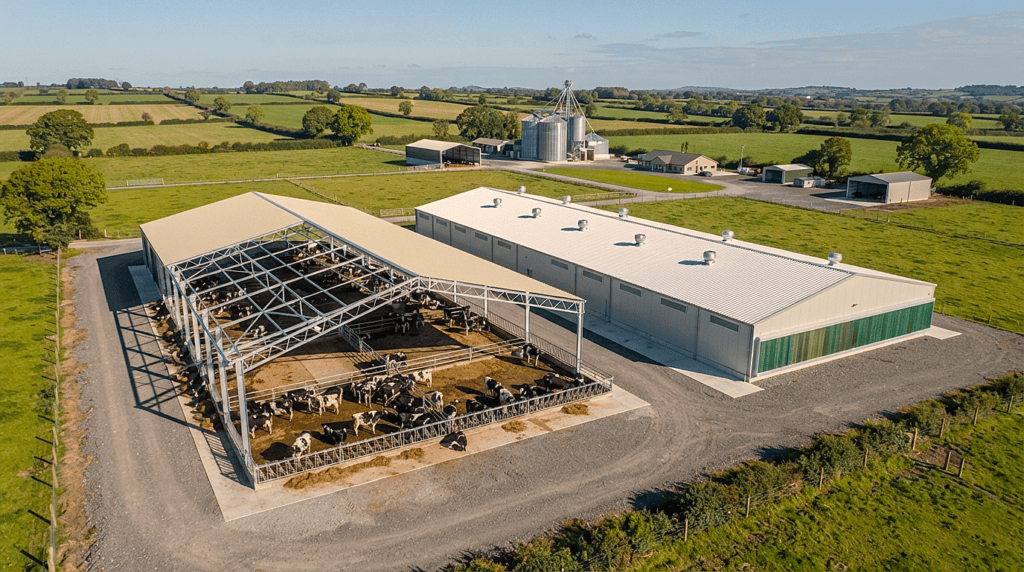
Where budgets allow, a single steel-framed structure can be partitioned to serve more than one type of livestock, sharing the same roof, ventilation, and foundation while keeping species separated. This brings the cost per square foot down compared to building separate structures for each animal type, which is why livestock sheds on a pre-engineered frame suit mixed farms so well.
What Dairy and Livestock Sheds Cost in Pakistan
Cost is usually the first question every farm owner asks, and it’s a fair one. Pricing depends on covered area, roof span, the roofing and cladding chosen, foundation work, and distance from the fabrication yard.
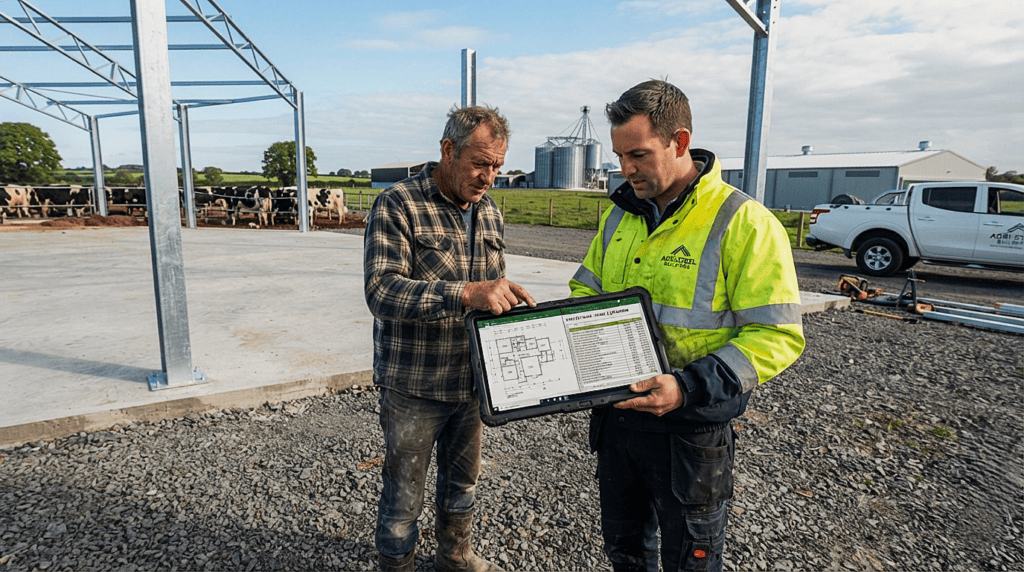
Rather than quote figures that go stale within months, it helps more to understand what sits behind the number on a quote. Steel City’s steel shed price per square foot cost guide breaks down current rate ranges by material and specification, a useful starting point before approaching a fabricator. When comparing quotes, ask for an itemized breakdown of structure, roofing, foundation, and extras, rather than one lump-sum figure.
As a general rule, pre-engineered steel construction tends to be more economical than brick-and-mortar sheds once you factor in build time, labor, and the lower long-term maintenance steel offers over masonry. That long-term view matters more for a working farm than the sticker price on day one.
Building in Multan and Across South Punjab
Location changes the design brief. A shed built for the cooler Potohar plateau doesn’t need the same heat mitigation as one in South Punjab, where summer heat is more extreme and lasts longer into the evening.
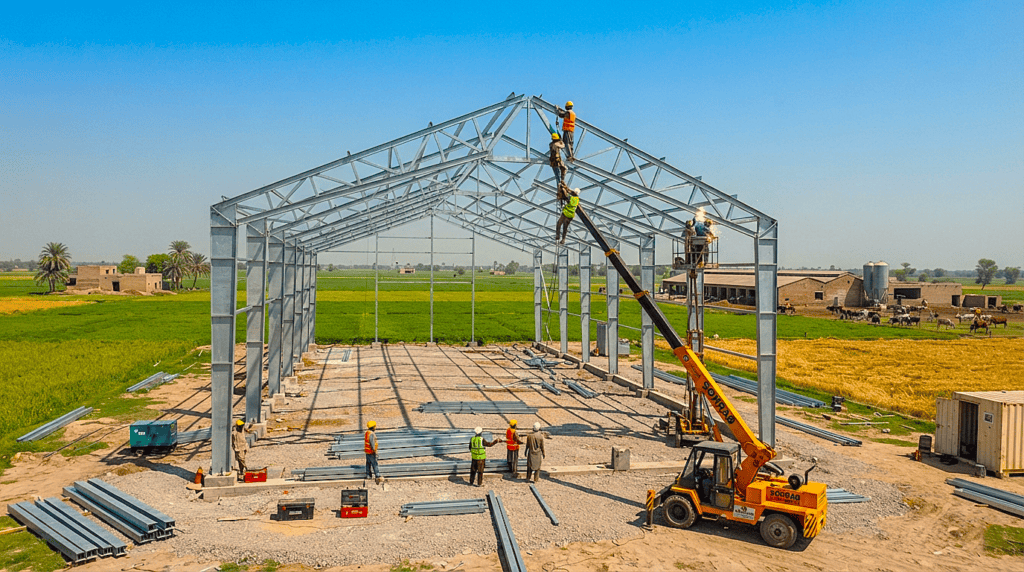
For farms around Multan and the surrounding districts, from Rahim Yar Khan to Dera Ghazi Khan, ventilation and roof reflectivity move from a nice-to-have to a genuine necessity. Steel City has been fabricating industrial steel sheds and PEB structures in Multan for years. Its Multan office on Nishtar Road means farm owners get a team that designs for this exact heat and dust load, not a generic template.
It’s also worth asking a local builder about wind loading. Dust storms and pre-monsoon squalls here can be sudden and strong, so a shed’s frame needs to handle lateral wind pressure, not just vertical roof load.
Beyond the Shed: Completing Your Farm Setup
A dairy or livestock shed rarely stands alone on a working farm. Most operations also need a small office for record-keeping, plus secure storage for feed, medicine, and equipment.
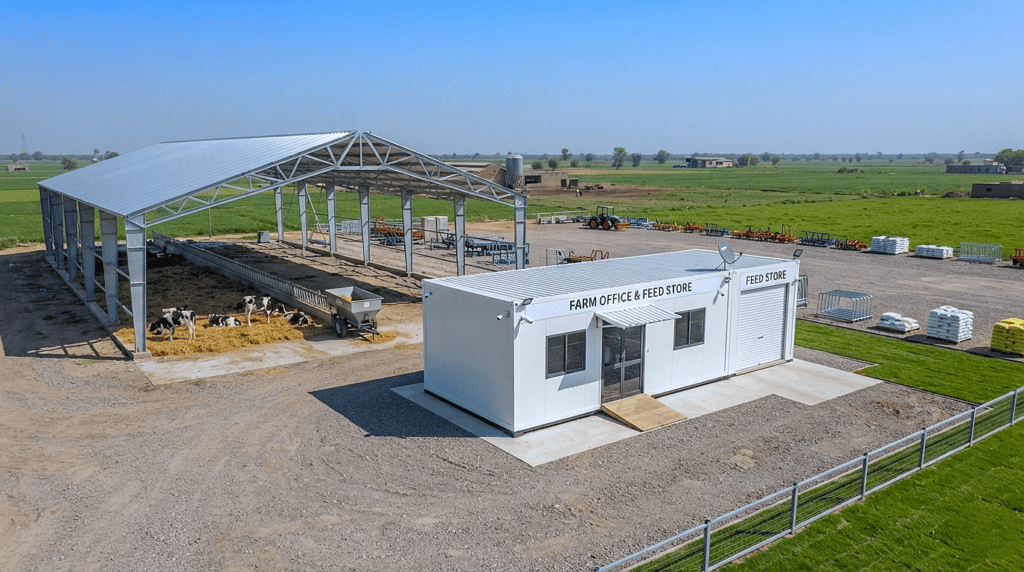
Prefabricated office containers and porta cabins are a practical way to add this space quickly, without a separate construction project. They arrive insulated and wired, can sit near the shed entrance, and move later if the farm layout changes. Some farms add a small guard cabin at the main gate too, for the same quick-deployment reasons. This modular approach means the office or staff cabin never has to slow down the shed construction timeline.
Ready to Build a Shed That Fits Your Climate and Your Herd
A well-designed dairy shed pays for itself through healthier animals, steadier milk yields, and lower vet and energy bills. Ventilation, roofing, orientation, and drainage aren’t add-ons; they’re what separate a shed that merely shelters animals from one that protects your investment.
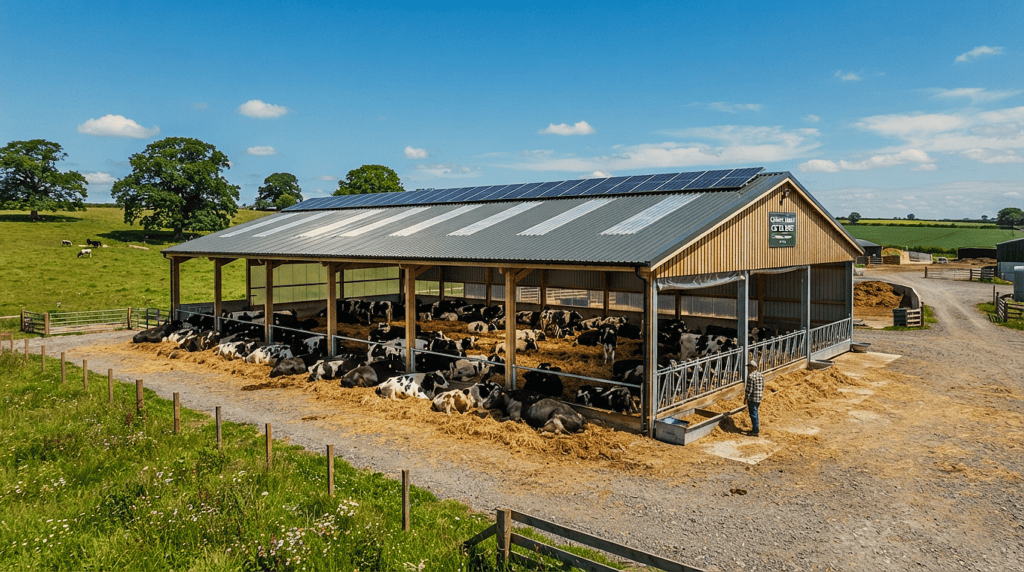
If you’re planning a new dairy shed, expanding a livestock setup, or exploring pre-engineered poultry farm sheds for a mixed operation, work with a team that designs for Pakistan’s climate, not a generic template. Steel City has been building prefabricated structures across Pakistan since 1992, and that experience shows in details like ridge ventilation placement and insulation grade.
Get in touch with Steel City’s team to discuss your site, herd size, and budget, and you’ll get a dairy shed design built around how your farm actually operates. Built for the heat, built for the herd, built with Steel City.
Frequently Asked Questions
What is the ideal design for a dairy shed in hot climates?
The ideal design combines a raised roof ridge so hot air can escape, open or louvered side walls for cross-breezes, and a reflective or insulated roof that limits heat gain from the start. Orientation matters too: positioning the shed’s long walls away from the harshest afternoon sun cuts heat load before you even add ventilation.
Can a dairy shed stay cool without electricity?
Yes, to a large extent. Passive choices like ridge ventilation, open side walls, reflective roofing, and shade trees keep a shed noticeably cooler without fans or coolers. Electric cooling can then be reserved for the hottest days instead of doing all the work.
What is the best roofing material for a livestock shed in Pakistan?
Reflective PPGI sheeting is the most common choice, balancing affordability with decent heat resistance. Insulated sandwich panels perform better in extreme heat but cost more upfront, while a double-layer roof with an air gap is a middle-ground option many farms prefer.
Are steel sheds better than brick sheds for dairy farming?
Steel-framed sheds generally go up faster, need less maintenance, and resist termites and rot better than brick-and-timber construction. Brick sheds can still work well, but they take longer to build and offer less flexibility for later expansion.
How much ventilation does a dairy shed actually need?
There’s no single fixed number, since it depends on herd size, shed dimensions, and local climate. As a working principle, a shed needs enough continuous airflow to stop heat and ammonia building up at animal height, usually by combining ridge vents with open or louvered side walls.