Sahiwal earned its name in agriculture long before industrial sheds arrived here. The Sahiwal breed of dairy cattle, developed in this very district, is still ranked among the best milking zebu breeds in South Asia, prized for its heat tolerance and steady output. That farming legacy is now colliding with a construction reality: dairy operations, cold chains, and warehouses all need covered space, and Dairy Farm Sheds have become the fastest, most practical way to build it.
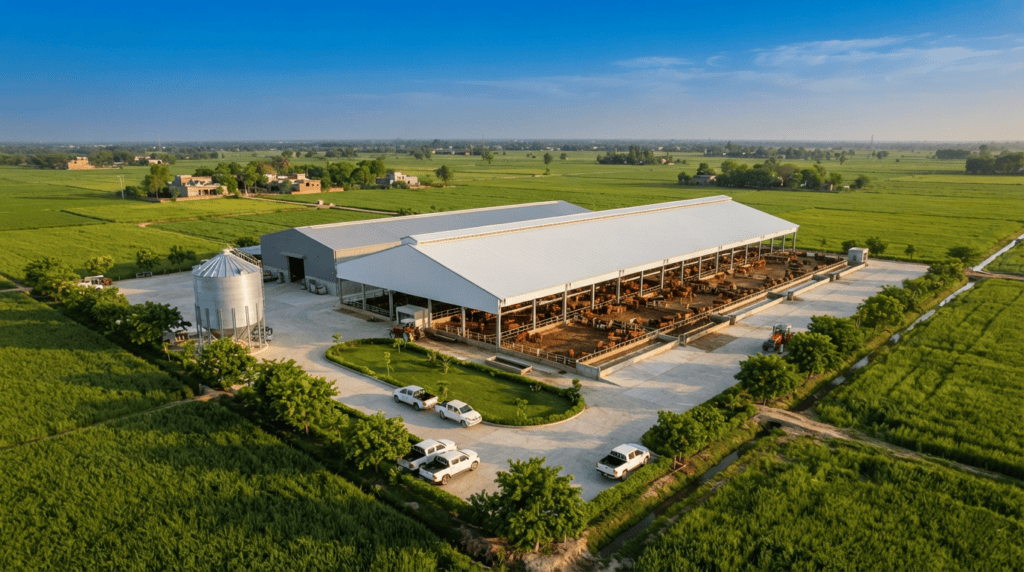
Unlike brick-and-mortar construction, a steel shed is engineered off-site. And assembled on location, so it goes up in weeks rather than months. It also shrugs off summer heat well past 40°C and monsoon downpours that can flood a poorly drained masonry structure. This guide covers what to look for and how the build actually happens.
Why Steel Sheds Make Sense for Sahiwal’s Farms and Industry
Traditional construction in this part of Punjab means brick walls, timber trusses, and months spent waiting on masons and weather. A steel shed cuts that timeline down considerably. Because the frame is fabricated to exact specifications in a factory and simply erected on site. a structure that could take a full season to finish in brick often comes together in a matter of weeks.
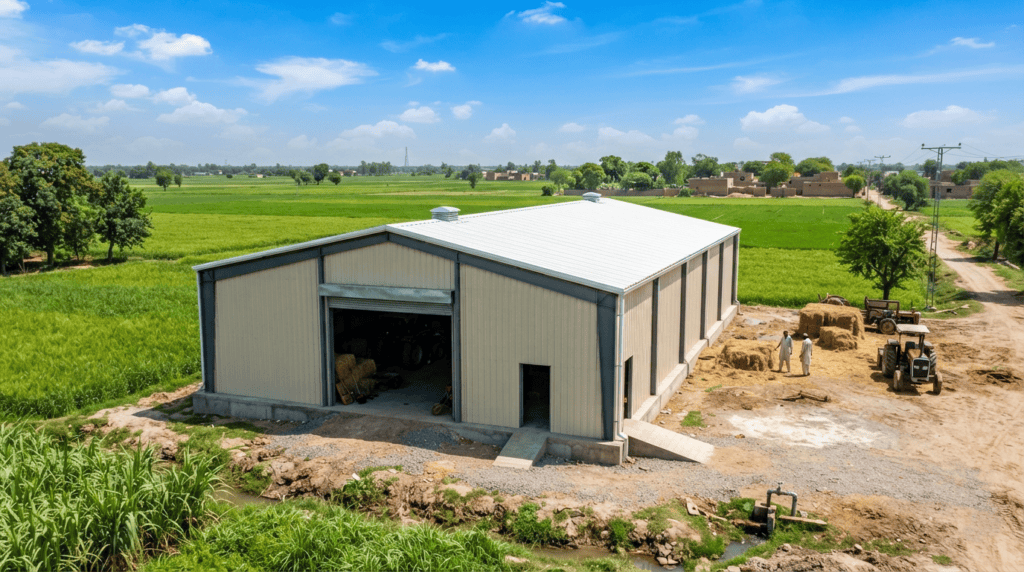
That speed matters most once you factor in the climate. Summers here regularly push past 40°C, and the monsoon season brings sudden, heavy rain. Steel frames don’t crack under thermal expansion the way masonry does, and a properly pitched steel roof sheds monsoon water instead of letting it pool against the structure. For a dairy operation especially, that reliability protects animals, feed, and equipment through the harshest months of the year.
There’s a cost angle too.Steel frames use material efficiently because engineers size every member for actual loads. You gain more usable covered space without sacrificing structural strength or building lifespan. Contractors classify these modern structures under the standard category of preengineered metal buildings. Engineers design the frame, roofing, and cladding as one complete fully unified system. Workers assemble these coordinated elements directly instead of piecing raw materials together onsite. If you want the fuller technical picture of how this works across different industries, our guide to PEB structures in Pakistan covers the engineering side in more depth.
Dairy Farm Sheds Built Around Sahiwal’s Livestock Sector
Sahiwal’s connection to dairy farming runs deep. The Sahiwal breed, developed right here, remains one of the most productive dairy cattle breeds in the region — valued for consistent milk yield, a calm temperament at milking time, and real tolerance for heat and ticks. Farms across the district range from small family herds to larger commercial dairies, but the shed requirements are similar: good airflow, shade from direct sun, and a layout that keeps animals, feed, and equipment sensibly apart.
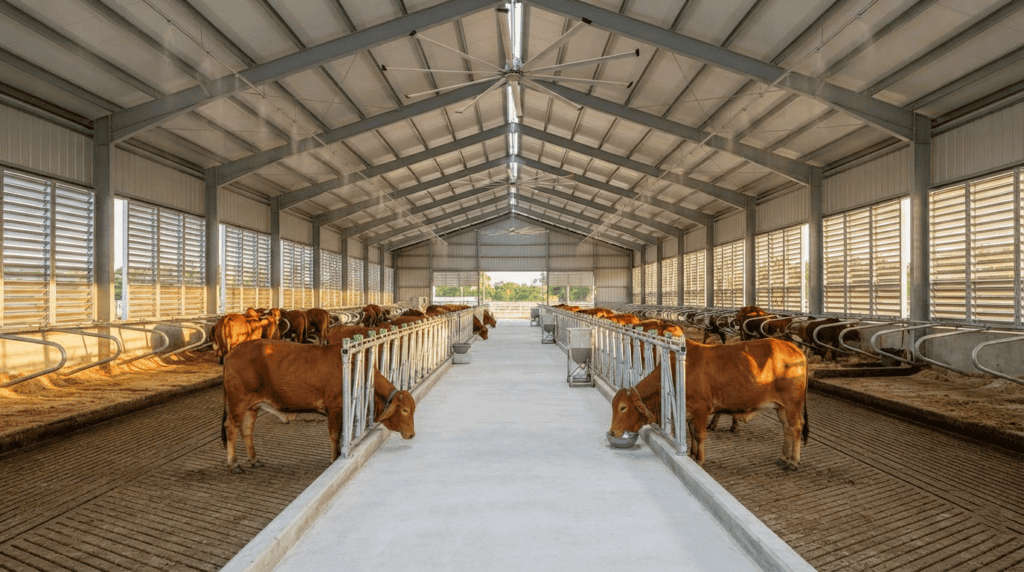
A well-designed Dairy Farm Sheds typically includes:
- Open or louvred sidewalls for cross-ventilation, since heat stress has a direct effect on milk output
- A roof pitch and overhang that keeps monsoon rain out without blocking airflow
- Separate bays for milking, feed storage, and calving, rather than one crowded space
- A concrete or raised floor that’s easy to hose down and drains properly
- Enough clear height to keep the shed cooler and leave room for fans or sprinkler cooling if you add them later
Because a steel shed is engineered before it ever reaches the site, these features can be planned in from day one rather than bolted on as afterthoughts. That matters for a farm owner who’s managing a herd day to day and doesn’t have the bandwidth for a construction project that drags on for months. It also matters for larger operations planning to grow: a steel structure can be extended with additional bays later without tearing down what’s already built.
Cold Storage Steel Sheds in Sahiwal
Between farm produce moving through local mandis and dairy output that needs to stay chilled before it reaches a processor, there’s steady demand for cold storage steel sheds in Sahiwal. Steel suits this job well because builders integrate insulated panels directly into frames. These insulated panel systems create a tightly controlled internal environment for cold storage. This modern design prevents thermal bridging problems that substandard masonry rooms often cause.
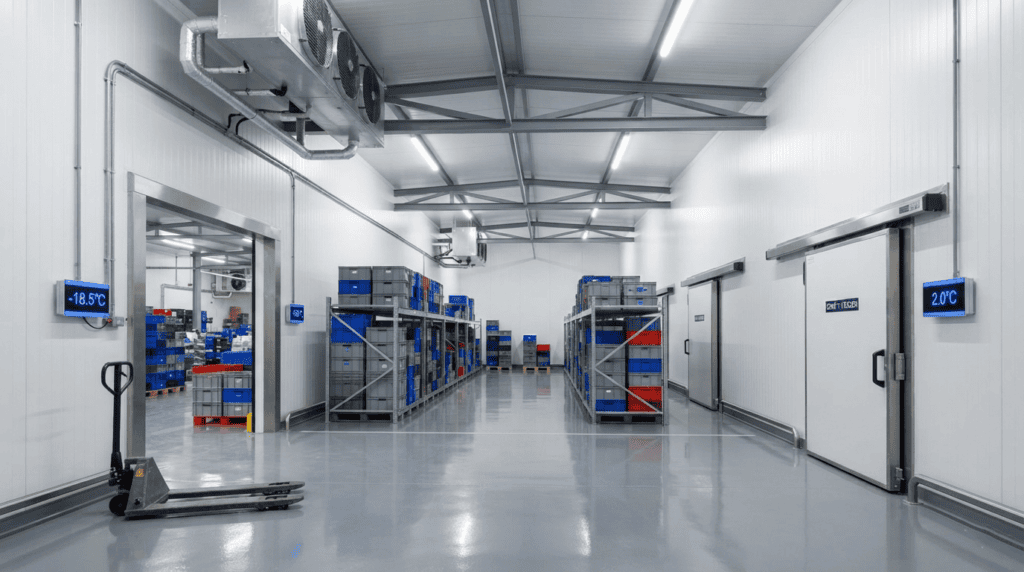
A cold storage shed differs from a standard dairy or warehouse shed in a few important ways:
- Insulated sandwich panels — usually EPS or PU core — used for both walls and roof
- Sealed door systems and minimal gaps anywhere that cold air could escape
- Flooring designed to handle moisture and temperature cycling without cracking over time
- Dedicated space for refrigeration units, generators, or backup power, since consistent power matters more here than in a standard shed
Getting the insulation and vapor barrier details right at the design stage saves real money later, whether you’re storing dairy, produce, or anything else that spoils fast. It’s one area where working with a builder who treats cold storage as its own specialty — rather than a standard shed with extra insulation bolted on — genuinely pays off. A rushed or under-insulated cold room tends to show its weaknesses in the first hot summer, usually in the form of higher power bills and spoiled stock.
Steel Sheds Near Sahiwal Coal Power Plant
The 1,320 MW Sahiwal Coal Power Plant, built under the China-Pakistan Economic Corridor, brought real industrial activity to the area around it. That growth has created its own demand for steel sheds near Sahiwal Coal Power Plant — contractor laydown yards, spare parts storage, maintenance workshops, and general logistics warehousing for the businesses that supply or service the plant.
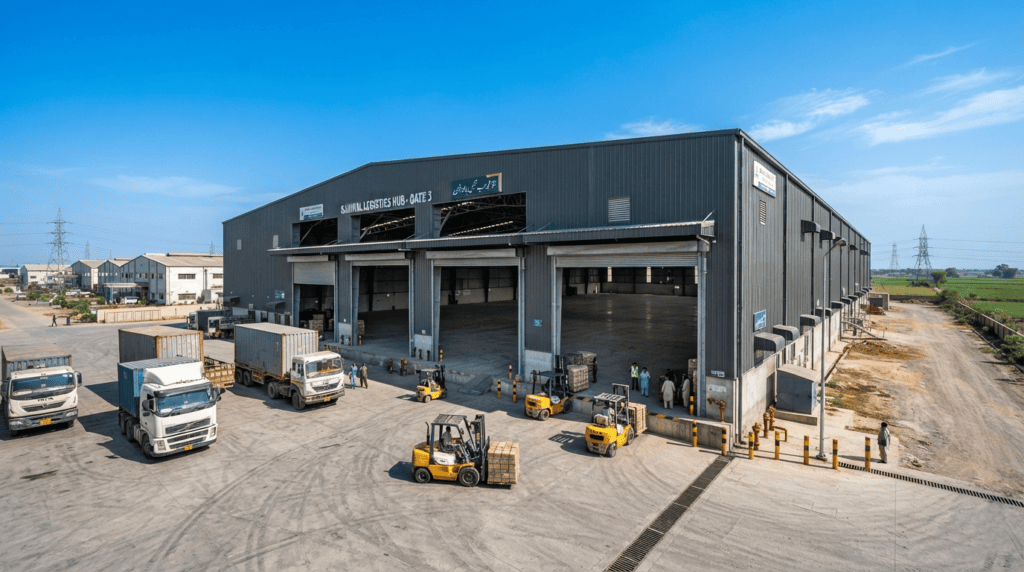
Steel construction fits this kind of industrial use well. Wide clear spans mean fewer internal columns getting in the way of machinery, vehicles, or stacked materials, and a shed can be extended in modular bays as storage needs grow. The same fabrication approach that works for a dairy shed scales up just as easily for a maintenance bay, an equipment store, or a general-purpose industrial warehouse.
This isn’t unfamiliar ground for us. We’ve delivered industrial steel sheds and PEB structures in nearby Multan as well, so the demands of a busy South Punjab industrial corridor are something we’ve built for before — not something we’re figuring out for the first time on your site.
Warehouse Construction in Sahiwal: How the Process Works
Warehouse construction in Sahiwal follows a fairly predictable sequence once you’re working with a pre-engineered steel system — part of why more businesses here are moving away from conventional construction for this kind of project.
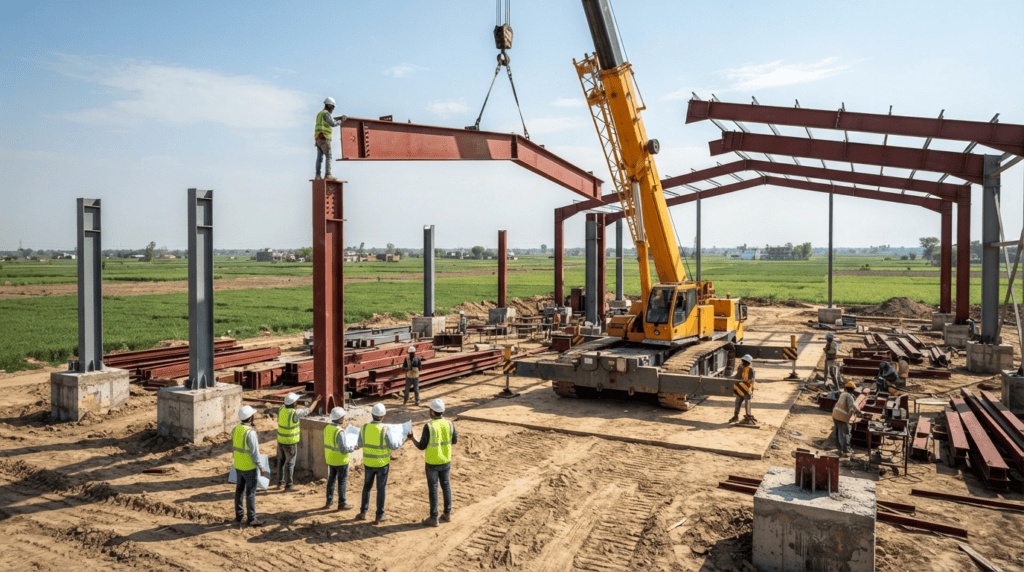
Here’s what the process generally looks like:
- Site assessment — reviewing soil conditions, access roads, and exactly how the space will be used, whether that’s storage, cold chain, vehicle movement, or offices
- Design and structural drawings — sizing the frame, spans, and roof pitch to match your load and usage requirements
- Fabrication — the steel frame and cladding are manufactured off-site to precise tolerances while foundation work proceeds in parallel
- Foundation and civil work — footings, flooring, and drainage prepared to receive the steel structure
- Erection — the frame goes up on site, followed by roofing, cladding, and any insulation or interior fit-out
- Handover — final checks, documentation, and a walkthrough before the space goes into use
Established industrial shed manufacturers standardize fabrication and inspect components before sending deliveries onsite. This controlled factory approach ensures high quality for every structural steel framework piece. You gain massive advantages over traditional teams building entire structures from scratch locally. Steel City is one of the industrial shed manufacturers in Pakistan with an in-house production facility, which also means less exposure to weather delays, since so much of the work happens under factory conditions rather than depending on clear skies.
Choosing the Right Steel Shed Builder in Sahiwal
Not every fabricator offers the same level of engineering behind the structure, and for something as important as a dairy shed or a cold storage facility, that difference tends to show up years later — in the form of rust, leaks, or a roof that doesn’t hold up past its second monsoon. A few things worth checking before you commit:
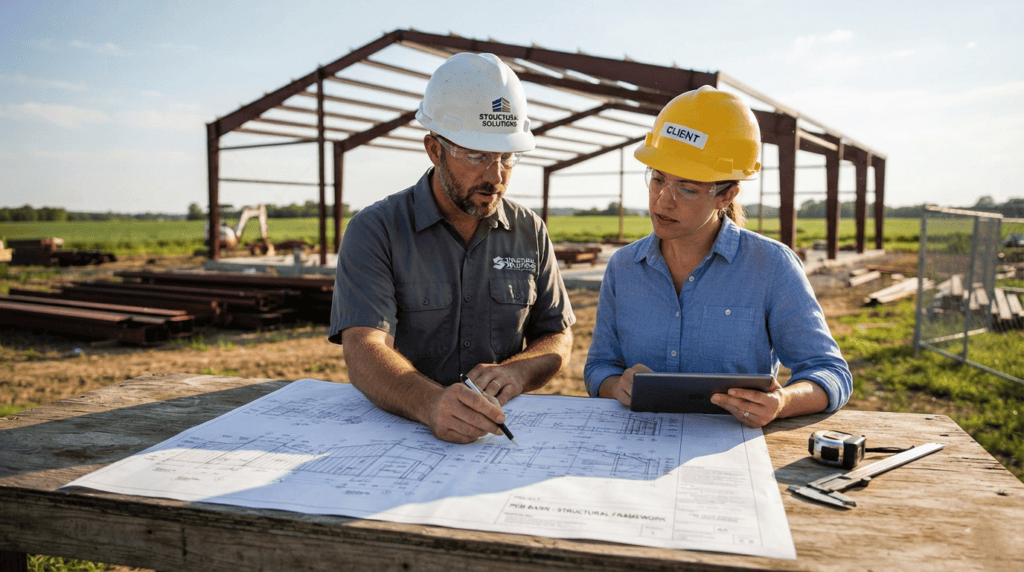
- Ask whether the design comes with proper structural drawings, not just a generic template
- Confirm the steel and cladding specification in writing, including coating and insulation type
- Ask about warranty terms and what’s covered if something fails early
- Look for a builder with real project experience in Punjab’s climate, not just generic industrial sheds
Sahiwal sits in good company here. Our team has completed similar steel shed and PEB factory builds in Gujranwala and Sialkot. Experienced professionals bringing your dairy shed or warehouse to life resolve site problems. These seasoned teams easily handle tricky site access, variable soils, and tight deadlines. Local builders regularly manage these common regional issues throughout Punjab and surrounding Sahiwal.
Not every project needs a large shed, either. Some sites want a small, secure space for a site office, guard room, or staff quarters alongside the main structure, and steel doesn’t stop being useful at that scale. Our work on shipping container homes in Lahore shows the same idea applied to compact, fully finished living and working spaces — worth a look if you need something smaller and self-contained to go alongside your main build.
Ready to Build in Sahiwal?
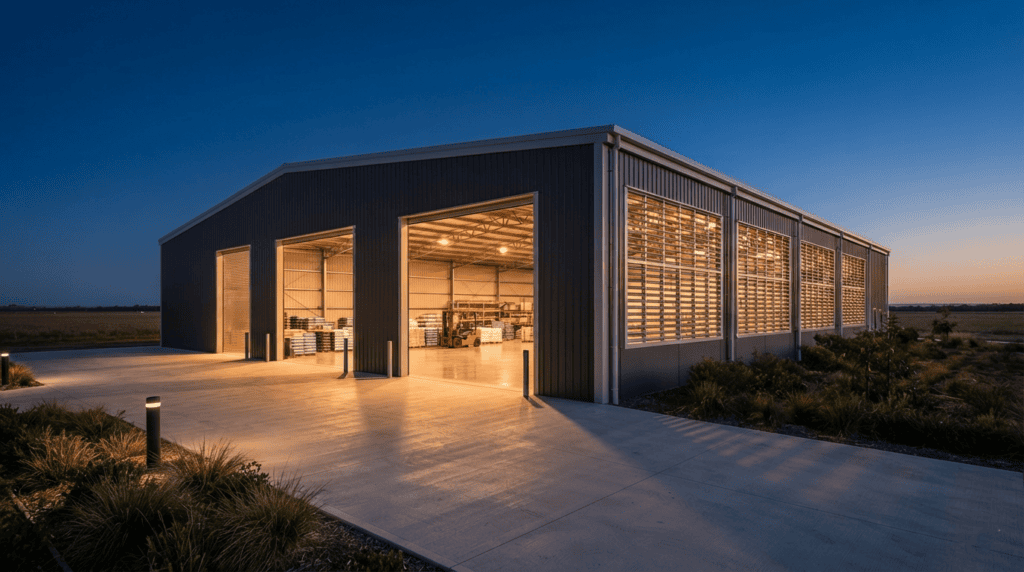
You should discuss your upcoming dairy shed, cold store, or warehouse around Sahiwal. A direct conversation quickly clarifies specific site conditions and your essential operational requirements. Simply bring your rough dimensions, target construction timeline, and intended building usage goals. Our expert engineering team will present custom designs that perfectly fit your operations.
Get in touch for a site assessment and a fixed-price quote — let’s build it right, the first time.
Frequently Asked Questions
How much does a steel shed cost in Sahiwal?
Cost depends on span, height, cladding choice — insulated or single-skin — foundation requirements, and how easy your site is to access. Rather than quote a flat number that won’t really apply to your project, we recommend a short site visit or call so we can scope things properly and give you a fixed-price quote.
How long does it take to build a Dairy Farm Sheds?
Manufacturers fabricate frames offsite while construction crews prepare the foundation work in parallel. This efficient concurrent workflow allows builders to erect most sheds within mere weeks. Construction schedules depend on shed dimensions, necessary site preparation, and civil phase weather.
Are steel sheds suitable for cold storage?
Insulated sandwich panels, tightly sealed openings, and specialized floors provide superior thermal efficiency. A modern steel shed easily matches the cooling performance of specialized cold rooms. Crews also erect steel facilities much faster and cheaper than traditional masonry structures.
What size shed does a dairy farm need?
Your total herd size and operational layout requirements directly determine the shed dimensions. Farmers often select separate milking sections, calving pens, and covered equipment storage spaces. A brief conversation about your future plans helps engineers size the building correctly. This careful planning also preserves flexible room whenever you require future shed expansion.
Can steel sheds handle Sahiwal’s summer heat?
Sheds control temperatures effectively when skilled engineers design them for that specific purpose. Proper roof pitch, ventilation systems, strategic insulation, and reflective metal sheets control heat. This thermal regulation protects stored inventory and keeps livestock comfortable inside dairy sheds.